
Whole-House Plumbing Inspections In Pasadena, CA, and Surrounding Areas: What’s Checked And Why It Matters
You keep hearing that faint drip somewhere behind the bathroom wall in your Pasadena, CA, and surrounding areas home, but every time you look, everything seems dry. Now you are staring at the ceiling over the hallway, wondering how much damage could be building up where you cannot see it.
That uneasy feeling is usually what drives homeowners to consider a whole-house plumbing inspection. The main concern is hidden problems that quietly grow into expensive repairs. The second concern is disruption. Nobody wants torn-open drywall, mold remediation, or days without water because something small went unchecked. A thorough inspection gives you clarity before minor wear turns into a major headache.
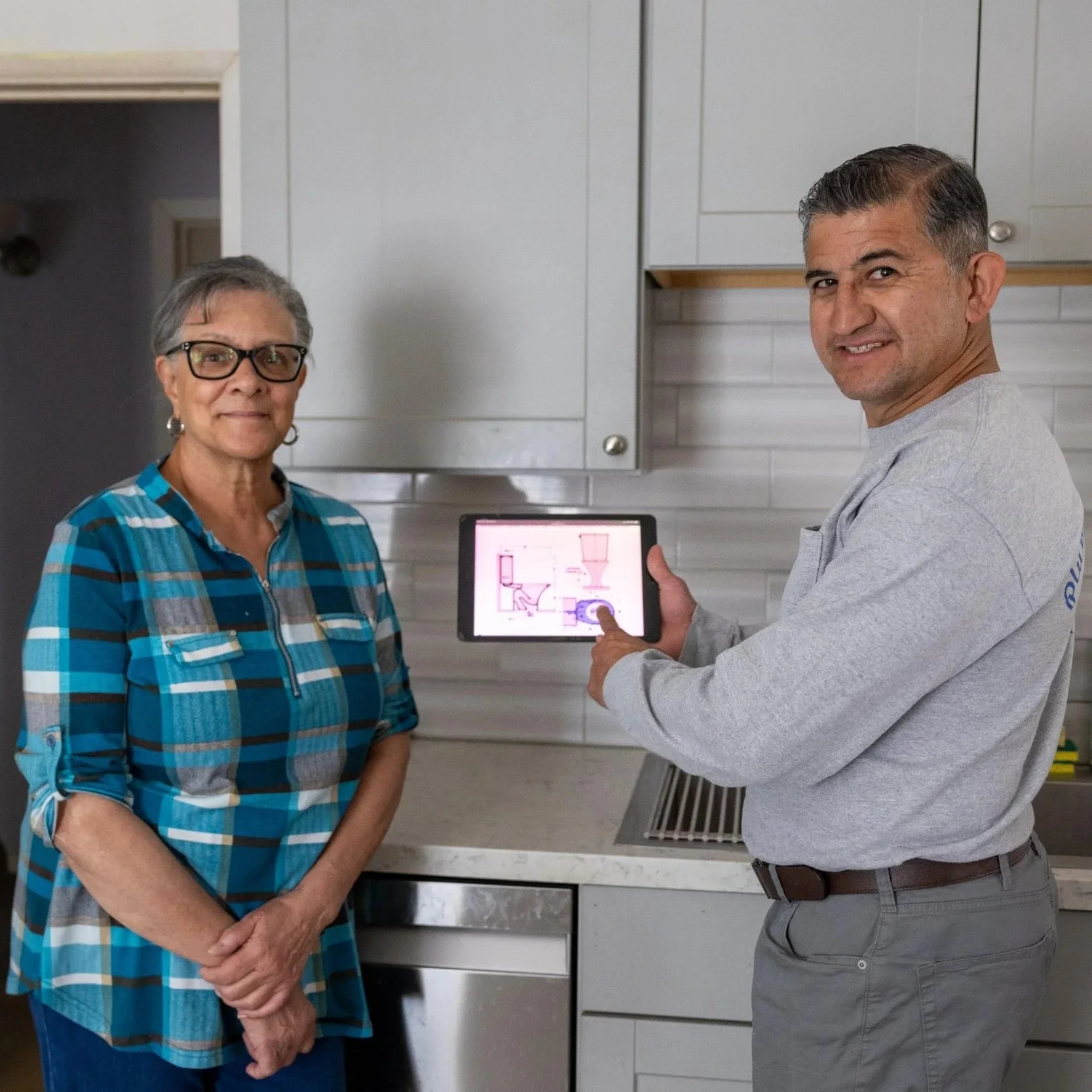
Plumber showing plumbing inspection results to homeowner on tablet during whole-house plumbing inspection to identify hidden leaks and system issues.
What A Whole-House Plumbing Inspection Actually Covers
A lot of people assume whole-house plumbing inspections mean running faucets and glancing under sinks. In reality, a proper inspection in Pasadena, CA, and surrounding areas evaluates the plumbing system as a connected network. That includes supply lines, drain lines, venting systems, water pressure levels, shutoff valves, fixtures, water heaters, and visible pipe materials throughout the property.
Water pressure testing is one of the most overlooked components. High pressure can feel great in the shower, but it strains fittings, appliance hoses, and valves. Over time, that stress increases the likelihood of leaks behind walls. Inspections measure both static and dynamic pressure to identify imbalances that most homeowners would never detect.
Drain systems are also assessed for flow and ventilation. Slow drains, minor gurgling sounds, or recurring odors often indicate buildup or venting issues. During whole-house plumbing inspections, those early symptoms are investigated before they escalate into backups that damage flooring or cabinetry.
Supply Lines: The Hidden Lifelines Behind Your Walls
Supply lines carry pressurized water through your home. In older Pasadena, CA, properties, those lines may be galvanized steel or aging copper. Corrosion and mineral buildup gradually restrict flow from the inside out. Homeowners often search, “Why is my water pressure getting worse over time?” Internal narrowing is a common answer.
Whole-house plumbing inspections examine visible supply lines for corrosion, discoloration, or improper support. Even small rust spots or greenish buildup around fittings can indicate weakening joints. Identifying those signs early allows for planned replacement rather than emergency repair after a sudden leak.
Improperly supported pipes also cause long-term issues. Vibration from water movement, especially under high pressure, repeatedly stresses joints. Inspectors look for loose strapping or friction points where pipes rub against framing. Those details may seem minor, but over the years, they have led to fatigue and failure.
Drain And Vent Systems: Where Most Homeowners Get Surprised
Drain lines operate by gravity, and a proper slope is critical. If the slope is insufficient or partially obstructed by buildup, wastewater slows down. That slowdown increases the risk of clogs and backups. Whole-house plumbing inspections include evaluating visible drain sections and assessing fixture performance.
Venting is another misunderstood component. Vent pipes allow air into the system so drains can flow smoothly. Without proper venting, negative pressure forms inside pipes, leading to gurgling drains or slow-emptying sinks. Many homeowners mistake those sounds for harmless quirks.
Ignoring venting issues can result in repeated clogs and strain on seals. Inspections confirm that vents are unobstructed and functioning correctly. Addressing vent problems early prevents pressure imbalances that contribute to leaks and fixture failure.
Water Heaters: The Quiet Risk In The Garage Or Closet
Water heaters rarely draw attention until hot water disappears or a puddle forms beneath the tank. Sediment buildup, aging pressure relief valves, and corroded connectors all increase the risk of failure. Whole-house plumbing inspections include checking the condition of the water heater and its safety components.
Sediment accumulation reduces efficiency and forces the heater to work harder. That extra strain shortens equipment life. Inspectors examine the tank exterior, test valves, and assess connection points for early signs of corrosion.
In Pasadena, CA, garages often house water heaters. A tank rupture can quickly release a significant volume of water. Identifying early warning signs during inspection helps prevent sudden flooding that can damage walls, stored belongings, and flooring.
Common Misconceptions About Inspections
One common misconception is that inspections are only necessary when buying or selling a home. While real estate transactions are good opportunities for whole-house plumbing inspections, routine evaluations also benefit long-term homeowners.
Another false assumption is that if nothing is visibly leaking, everything must be fine. Plumbing systems deteriorate gradually. Rubber seals harden. Valves wear out. Mineral buildup accumulates. Those processes occur quietly until performance changes or damage appears.
Homeowners sometimes hesitate because they fear inspections will lead to expensive recommendations. A responsible professional approach focuses on identifying real risks and clearly explaining options. Inspections provide information, not pressure.
When Should You Schedule One?
Homeowners frequently ask, “How often should I get a plumbing inspection?” For most homes in Pasadena, CA, scheduling whole-house plumbing inspections every few years is a practical guideline. Older homes or properties with a history of leaks may require more frequent evaluation.
You should also consider scheduling an inspection if you notice subtle changes. Rising water bills without increased usage. Reduced pressure at certain fixtures. Drains that empty more slowly than they used to. Those early signs often indicate underlying stress.
Major renovations are another ideal time. After remodeling a kitchen or bathroom, confirming that new components integrate properly with existing lines protects your investment and prevents strain on the system.
Why It Matters For Long-Term Property Protection
Plumbing failures rarely stay contained. A leak in an upstairs bathroom can damage ceilings, insulation, and flooring below. A clogged drain can overflow into cabinets and adjacent rooms. The cost of structural repairs often exceeds that of plumbing repairs.
Whole-house plumbing inspections reduce the likelihood of those cascading problems. Early identification of weak components allows for scheduled repair rather than emergency response. That planning minimizes disruption and preserves interior finishes.
Peace of mind also matters. Living with uncertainty about hidden leaks or aging pipes creates low-level stress. Knowing the condition of your system lets you focus on your daily life rather than worry about what might be happening behind the walls.
Working With Experienced Professionals In Pasadena, CA
At Plumbing Professionals, we approach whole-house plumbing inspections in Pasadena, CA, as comprehensive evaluations rather than quick checklists. We assess system performance, material condition, and pressure balance. We explain findings in plain language so homeowners understand what is urgent and what can be monitored.
Every home has a different history. Previous repairs, material types, and usage patterns all influence system condition. Thorough inspection respects those differences and provides realistic guidance tailored to your property.
Whole-house plumbing inspections are not about finding problems for the sake of it. They are intended to confirm that your plumbing system safely and reliably supports your home. Addressing minor issues early protects your structure, your comfort, and your budget over time.
