
What To Expect During A Professional Water Heater Installation
You wake up to a freezing shower, the bathroom mirror fogless because there is no steam, and suddenly everyone in the house is arguing about who used the last bit of lukewarm water. A failing water heater turns simple routines into daily frustration, raises energy bills, and leaves you wondering how disruptive replacing it will actually be.
Most homeowners put off water heater installation because they picture torn-up walls, days without hot water, and a confusing list of upgrades they do not understand. That hesitation often leads to leaks, rusty water in the tub, or a complete breakdown at the worst possible time, like right before guests arrive.
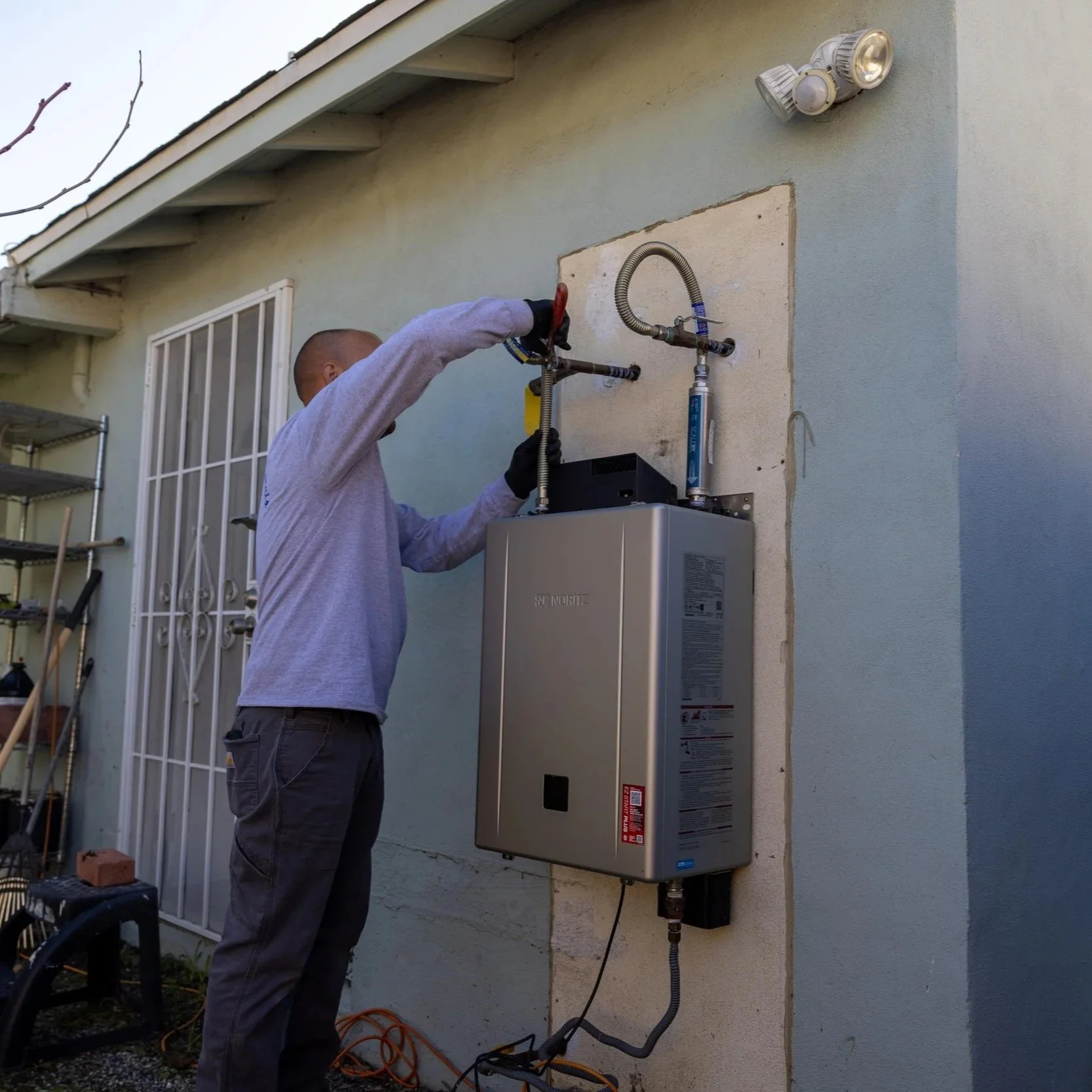
Technician installing outdoor tankless water heater system, connecting plumbing lines and ensuring safe, efficient water heater installation for residential home.
Why Your Old Water Heater Fails At The Worst Possible Time
Water heaters rarely quit in a calm, convenient way. They usually give subtle warnings that are easy to ignore, such as rumbling from the tank, inconsistent water temperatures, or hot water running out faster than it used to. Many homeowners assume those are minor annoyances rather than signs that an aging system is nearing the end of its lifespan.
Inside a traditional tank water heater, sediment builds up over time. Minerals from your water supply settle to the bottom of the tank, forming a barrier between the burner or heating element and the water. That buildup forces the unit to work harder, increases energy consumption, and gradually reduces available hot water. As the metal tank expands and contracts with each heating cycle, wear increases. Eventually, small internal cracks or corrosion lead to leaks that cannot be repaired.
Water heater installation becomes necessary when repair no longer makes financial sense. Homeowners often misunderstand that replacing a major component in a ten- or twelve-year-old unit does not restore it to like-new condition. Other parts remain aged and vulnerable. A professional installation addresses the root issue by replacing the entire system, updating connections, and bringing everything up to current safety standards.
What Happens On Installation Day In A Real Home
One of the most common questions we hear is, “What happens during water heater installation?” The idea of plumbers working in a tight utility closet or garage corner can make homeowners nervous about mess and downtime. In reality, a professional installation follows a clear process designed to minimize disruption while protecting your home.
First, the old unit is safely shut down and disconnected. Gas lines are turned off and capped, or electrical circuits are disconnected at the breaker. The water supply is shut off, and the tank is drained completely before removal. Draining matters because a full tank can weigh several hundred pounds. Careful handling prevents damage to floors, walls, and surrounding fixtures during removal.
Once the old heater is out, the installation area is evaluated. A professional checks the condition of shut-off valves, supply lines, venting, and the drain pan. Many homeowners do not realize that older installations may not meet current code. Upgrading vent connectors, seismic straps, expansion tanks, or gas flex lines often happens during water heater installation. Those updates improve safety and long-term performance rather than simply swapping one tank for another.
Tank Versus Tankless: What Changes During Installation
Homeowners frequently ask, “Should I switch to tankless during water heater installation?” That question arises when frustration with running out of hot water prompts people to consider alternatives. Traditional tank heaters store and heat a set amount of water, while tankless systems heat water on demand as it flows through the unit.
The installation process differs significantly between the two. Replacing a tank with another tank of similar size is usually straightforward if the location and fuel source remain the same. Converting to tankless may require upgraded gas lines, new venting, or electrical adjustments. Tankless units often need larger gas supply lines because they fire at higher BTU rates to heat water instantly.
Many homeowners underestimate those infrastructure requirements. A tankless system can provide endless hot water, but only if the home’s gas or electrical capacity supports it. During a professional water heater installation, an experienced plumber evaluates those factors before recommending a change. Rushing into a tankless conversion without proper assessment can lead to performance issues, higher costs, or code complications.
The Hidden Safety Upgrades Most People Never Notice
Water heater installation involves more than connecting pipes. Safety components play a crucial role in protecting your home and family. Temperature and pressure relief valves, proper venting, and correct combustion air supply are all part of a compliant installation. When these elements are overlooked or installed incorrectly, risks increase.
For gas water heaters, the venting must safely direct exhaust gases out of the home. Improper vent slope or loose connections can allow carbon monoxide to leak into living spaces. Many homeowners assume that if the old vent worked, the new one will too. However, code standards evolve, and older vent materials may no longer be acceptable. A professional installation verifies that vent connectors are secure, correctly sized, and properly pitched.
Thermal expansion is another commonly misunderstood concept. When water heats, it expands. In closed plumbing systems, that expansion can create excess pressure. An expansion tank absorbs that pressure, reducing stress on pipes and fixtures. Some older homes lack expansion tanks entirely. Adding one during water heater installation protects the new unit and the rest of your plumbing system from premature wear.
Common Homeowner Mistake: Focusing Only On Price
A frequent mistake homeowners make is choosing a water heater installation based solely on the lowest quote. It is understandable to want to save money, especially when a replacement feels unexpected. However, lower upfront cost sometimes means corners were cut in materials, safety upgrades, or workmanship.
For example, reusing old supply lines or skipping recommended vent updates may reduce the invoice today. Over time, those shortcuts can cause leaks, inefficiency, or inspection failures. A professional installation accounts for the entire system, not just the tank. Proper sizing also matters. Installing a unit that is too small results in frequent hot water shortages, while oversizing increases energy costs.
At Plumbing Professionals, we explain why certain components are included rather than treating them as optional add-ons. Clear communication helps homeowners understand that water heater installation is not just about restoring hot water. It is about installing a system that performs reliably, operates safely, and aligns with current standards.
“How Long Will I Be Without Hot Water?”
Another common search is, “How long does water heater installation take?” Most straightforward replacements can be completed within a few hours. That timeframe includes removing the old unit, making any necessary code upgrades, installing the new heater, connecting water, gas, or electrical lines, and testing the system.
Hot water will not be available immediately after the tank is filled. The unit needs time to heat the water to the set temperature. For a standard tank heater, that may take an hour or two, depending on capacity and fuel type. Planning installation earlier in the day helps minimize inconvenience for evening routines like showers and dishwashing.
More complex projects, such as relocating a heater or converting from a tank to a tankless system, may require additional time. Permitting and inspections can also affect scheduling. Discussing expectations upfront helps avoid surprises. A professional water heater installation prioritizes efficiency while maintaining attention to detail and safety.
What You Should Notice After A Proper Installation
After a professional water heater installation, you should notice consistent water temperature and improved recovery time. Showers should remain hot without sudden temperature swings when someone runs a sink or flushes a toilet. Rusty or discolored water from an aging tank should no longer appear.
Energy efficiency often improves as well. Newer models are designed to meet higher efficiency standards. Reduced sediment buildup, updated insulation, and properly functioning burners or elements contribute to better performance. Lower monthly utility bills may follow, although exact savings depend on usage and fuel costs.
Peace of mind is another significant benefit. A new installation reduces the risk of sudden leaks that can damage floors, drywall, and personal belongings. Water heater failures sometimes cause substantial property damage when tanks rupture unexpectedly. Replacing an aging unit proactively through professional water heater installation can prevent that kind of stressful, expensive emergency.
Preparing Your Home For Installation Day
Homeowners can take a few simple steps to make water heater installation smoother. Clearing a path to the unit allows plumbers to move equipment safely. Removing stored items around the heater improves access and reduces the risk of accidental damage. If the heater is located in a garage, driveway access can speed up removal and delivery.
Communication also helps. Informing the household about a temporary water shut-off helps avoid confusion. Planning around school schedules, remote work calls, or other commitments can reduce inconvenience. Most professional installations are completed in a single visit, but being prepared keeps the process organized.
Water heater installation does not have to be chaotic or stressful. With proper planning, experienced plumbers, and clear expectations, the transition from the old unit to the new system can feel straightforward. Understanding each step removes uncertainty and allows you to focus on the practical outcome: reliable hot water for everyday life.
