
Trenchless Sewer Repair vs Digging: Is No-Dig Worth It?
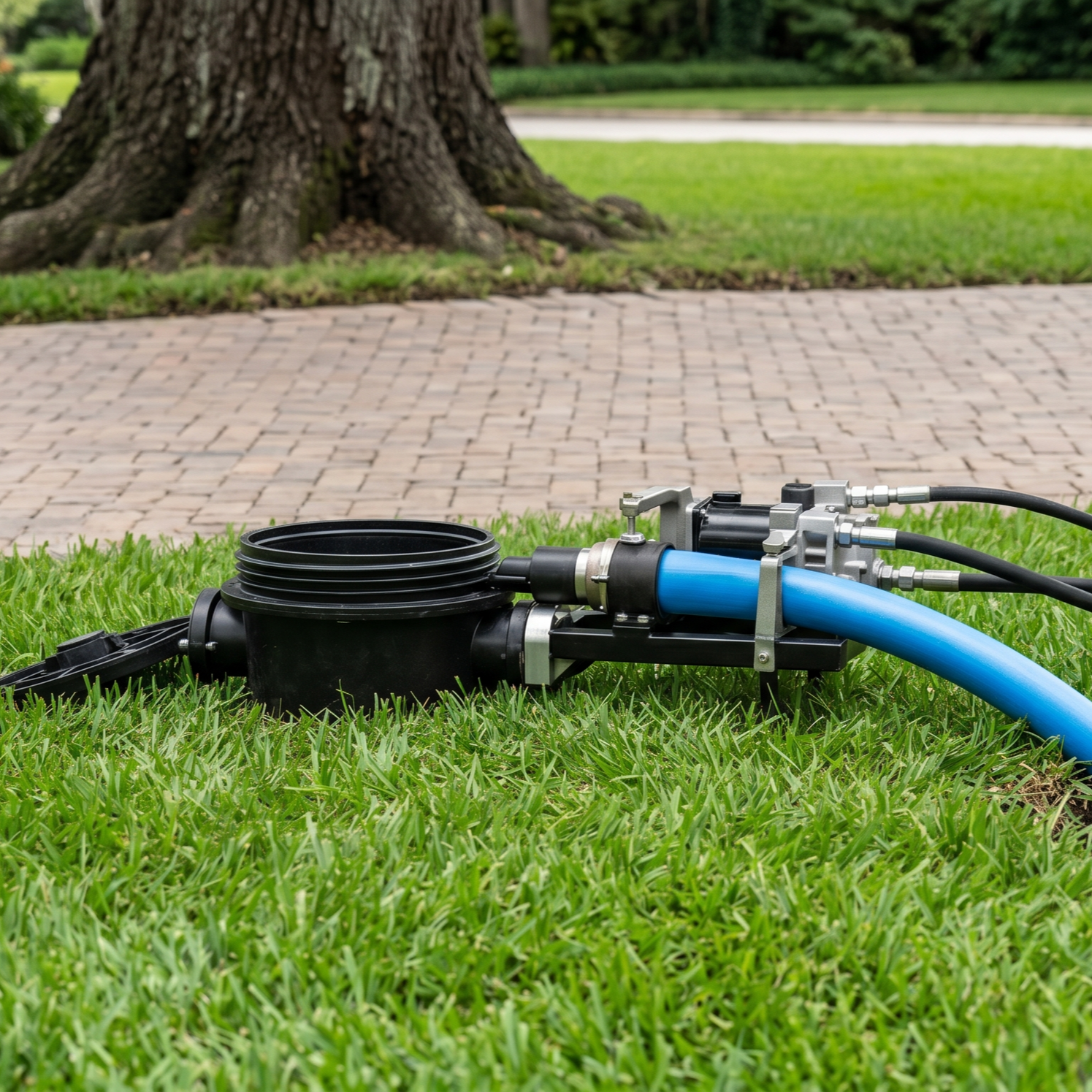
Quick Answer: Trenchless sewer repair is usually worth it when the line runs under a driveway, a mature tree, a patio, or a finished walkway, because it repairs the pipe through one or two small access points rather than a trench across your property. It avoids tearing out and rebuilding hardscape, and a lined or burst-in pipe lasts 50 years or more. Traditional digging still wins when the pipe is fully collapsed, badly out of line, or so far gone it can't be lined or burst. A camera inspection decides which one your line actually needs.
The plumber comes up from the clean-out with the bad news: the sewer line has to be fixed, and it runs straight under your driveway and a tree that's older than you are. Your first picture is a backhoe, a trench across the yard, and a season of mud. That used to be the only option. It isn't anymore. The real question now is whether to dig or repair the pipe from the inside without opening the ground. Which one is worth the money depends on what your line looks like and what's sitting on top of it.
Two Ways to Fix the Same Pipe
Traditional repair is the method everyone pictures. A crew digs a trench down to the sewer line, lifts out the broken pipe, lays new pipe, then backfills and rebuilds whatever was on top, the lawn, the driveway, the patio. It's direct, and it works on any pipe in any condition. The cost and the pain come from the digging and the rebuilding, not the pipe.
Trenchless repair fixes the line through small access points, often just the existing clean-out and one dig point. There are two main no-dig methods, each solving different problems. Knowing which is which makes the rest of the decision clearer.
| Method | How it works | Best for |
|---|---|---|
| CIPP lining (cured-in-place pipe) | A resin-soaked liner is pulled into the old pipe and cured hard, forming a new pipe inside the old one | Pipes that are cracked, leaking, or root-intruded but still holding their shape |
| Pipe bursting | A bursting head is pulled through the old pipe, breaking it outward while dragging a new pipe in behind it | Pipes too far gone to line, or undersized lines you want to upgrade |
| Open-trench dig | The pipe is excavated, removed, and replaced in an open trench | Fully collapsed pipe, severe sags, or lines that can't take a liner or burst |
What You're Really Paying For With Each One
The sticker on a sewer repair isn't mostly the pipe. It's everything around the pipe. That's the piece homeowners miss when they compare the two, and it's where trenchless earns its keep, or doesn't.
| Cost and disruption driver | Traditional digging | Trenchless repair |
|---|---|---|
| Surface restoration | Major, you rebuild driveway, hardscape, and landscaping after the trench | Minimal, only the small access points are restored |
| Time on site | Several days, often longer with restoration | Often one to three days |
| Mature trees and hardscape | Roots cut, slabs broken, hard to put back the same | Left largely intact |
| Pipe lifespan after repair | Decades with new pipe | 50 years or more for a quality liner or burst-in pipe |
| Equipment footprint | Heavy excavation gear, spoil piles | Smaller rig, far less mess |
Look at that, and a pattern jumps out. When the pipe runs under something expensive or irreplaceable, a brick driveway, a flagstone patio, a tree that shades the whole yard, the dig-and-rebuild side of the ledger swells. Restoring a torn-out driveway can cost more than the pipe work itself. Trenchless skips most of that, which is why it so often comes out ahead on tougher lots even when the pipe work alone looks similar.
Where Trenchless Clearly Wins
Picture the line running under a paved driveway. To dig it, a crew breaks the concrete, trenches, replaces the pipe, backfills, and then you pay to pour a new driveway and wait for it to cure. With CIPP lining, the same crew can rehab that pipe through the clean-out and one small pit, and your driveway never gets touched. The savings isn't in the pipe, it's in the slab you didn't have to replace.
Mature trees are the other clear case. Roots have likely cracked the joints already, which is why the line failed, and digging means cutting major roots that can sicken or topple the tree. Lining seals the cracks the roots came through, leaving the root system in the ground. For a historic home or a property where the landscaping is part of the value, keeping the yard intact is worth real money.
Where Digging Still Makes Sense
Trenchless isn't magic, and a good plumber will tell you when it's the wrong tool. A liner needs a host pipe to line, so a fully collapsed section, one that's crushed flat or broken into pieces, has nothing to hold the new liner and has to be dug. A pipe with a severe belly, a deep sag holding water, can't be fixed by lining either, because the new liner just follows the same low spot; that grade problem needs the pipe re-laid by hand. And sometimes a line is so deteriorated, with multiple failures along its length, that replacing it outright is the more honest fix than patching it from the inside.
This is the whole reason a camera inspection comes first. The video shows whether the pipe is cracked but intact, a candidate for lining, or crushed and sagging, a candidate for the trench. Choosing trenchless or digging without that look is guessing, and guessing wrong on a sewer line is expensive.
As a rough rule, if the pipe is cracked, leaking, or root-intruded but still round, trenchless can usually handle it. If it's collapsed, crushed, or badly sagged, plan on digging. The camera settles it.
Frequently Asked Questions
The pipework itself can cost about the same, or a little more, upfront. Trenchless tends to win on the total once you add restoration, because you're not rebuilding a driveway, patio, or landscaping after a trench. On an open lot with nothing on top of the line, digging can come out cheaper. On a tight lot with hardscape or mature trees, trenchless usually wins overall.
A quality cured-in-place liner or a pipe-bursting replacement is built to last 50 years or more. The liner forms a smooth new pipe inside the old one, with no joints for roots to find, which is part of why it lasts so long. That lifespan is comparable to, and sometimes better than, a freshly dug-in pipe.
CIPP lining can't, because it needs an intact host pipe to line against, and a collapsed section has nothing to hold the liner. Pipe bursting can sometimes replace a line that's broken but not fully crushed, since it pulls new pipe through the old path. A truly collapsed or crushed line, or one with a severe sag, generally has to be dug and replaced.
Far less than a trench. Most jobs need only the existing clean-out and one or two small access pits, so the lawn, driveway, and trees stay largely untouched. Compared with an open trench running the length of the yard and the days of restoration that follow, the difference is night and day.
Yes, and it's the most important step. The camera shows whether the pipe is cracked but holding shape, a fit for lining, or collapsed and sagging, which points to digging. It also locates the trouble and measures how far down the line it sits. Skipping it means choosing a repair method blindly.
Lining is the choice when the existing pipe is cracked or leaking but still round, and you're rebuilding it from the inside. Bursting is the choice when the pipe is too far gone to line or when you want to upsize a small line, since it replaces the pipe entirely along the same path. The camera and the pipe's condition decide which fits.
Worth It Depends on What's On Top of the Pipe
Trenchless sewer repair is worth it most of the time, a line runs under something you'd hate to dig up, a driveway, a patio, a tree that took 40 years to grow. It fixes the pipe and leaves the surface alone, and the repaired line lasts as long as a dug-in one. Digging is the only option for a collapsed, crushed, or severely sagging pipe that simply can't be fixed from the inside. Put a camera down the line first, see what you're dealing with, and the choice between the two stops being a gamble.
Facing a sewer repair and dreading a torn-up yard? — Get the line scoped and find out whether no-dig is the right call for your pipe. Plumbing Professionals serves Pasadena, Altadena, South Pasadena, and the surrounding areas. Call (626) 247-3401.
