
Galvanized Pipes Rusting Shut? When to Repipe Before a Burst
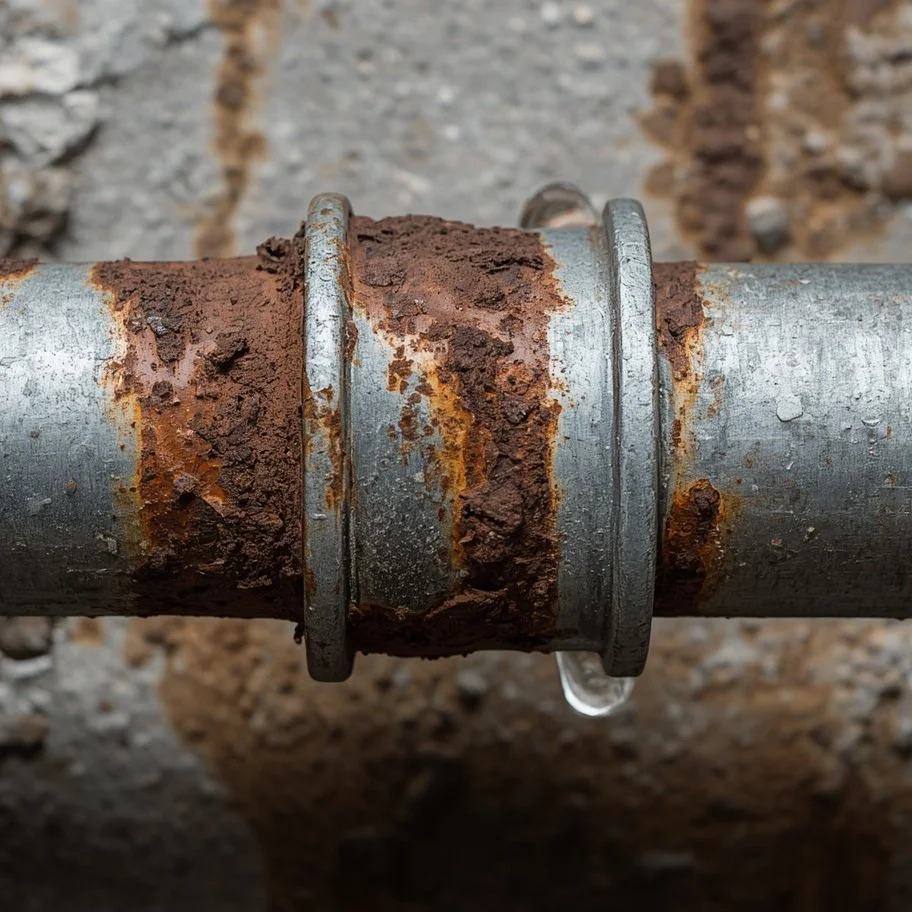
Quick Answer: Galvanized steel supply pipes corrode from the inside out, so by the time you see brown water and weak pressure, the pipe walls are already half eaten through. They don't fail gracefully; an old galvanized line goes from "annoying" to a flooded ceiling when a thin spot finally lets go under pressure. If your home was built before the 1960s and still has its original galvanized supply lines, replacing them before they burst is almost always the cheaper, drier choice. The warning signs, rusty water, dropping pressure, and visible corrosion at fittings, tell you the clock is running.
You run the kitchen tap first thing in the morning, and the water comes out tea-colored for a few seconds before it clears. Pressure in the upstairs shower has been fading for a year. The pipes you can see in the basement or crawlspace show rusty crust where they screw into the fittings. None of it is dramatic, so it's easy to live with. That's exactly the trap with galvanized pipe. It corrodes quietly for decades, and then one day a thin spot gives out under household pressure, and you've got water pouring through a ceiling.
What's Actually Happening Inside the Pipe
Galvanized steel was the standard for home water lines from the early 1900s into the 1960s. It's a steel pipe dipped in a zinc coating, and the zinc is the whole point; it's there to corrode instead of the steel underneath. The catch is that the zinc doesn't last forever. After a few decades of water running through, the zinc wears away, and once it's gone, the bare steel underneath starts to rust.
That rust doesn't just thin the pipe wall. It builds up on the inside as rough, flaky scale that narrows the channel water flows through. Picture a garden hose someone packed with sand, the opening shrinks until barely anything gets through. The pipe is rotting outward and clogging inward at the same time. Hard water speeds the whole thing up, because the same minerals that scale your water heater also feed the crust inside the steel pipe.
The reason this matters: galvanized corrosion happens from the inside, where you can't see it. By the time the symptoms reach your faucet, the damage is well along. You're not looking at the start of the problem. You're looking at the late stage.
The Warning Signs, and What Each One Tells You
Each symptom maps to a stage of the same decay. Read them together, and you can tell how far gone the system is.
| Warning sign | What's causing it | What it tells you |
|---|---|---|
| Brown or rusty water, worst on the first draw of the morning | Rust shedding off the pipe wall overnight | Active interior corrosion; the pipe is rusting now |
| Water pressure dropping across the whole house | Rust scale narrowing the pipe's inside diameter | Advanced buildup; flow is being choked off |
| Hot water rustier than cold | Heat accelerates corrosion, so hot lines fail first | Hot-side pipes are further along than cold |
| Rusty staining or crust at threaded fittings | Corrosion concentrated where the wall is thinnest | Fittings near failure; common burst points |
| Pinhole drips or small stains on pipe runs | Wall eaten through in spots | The pipe has started to fail; a burst is close |
If you're seeing the first two, the corrosion is real, but you have time to plan. If you're seeing the last two, the line is telling you it's near the end, and waiting is a gamble.
Why Galvanized Doesn't Fail Gently
Some things wear out with plenty of warning. Galvanized pipe isn't one of them. The corrosion is uneven; a long run can have one badly thinned spot while the rest looks passable. Household water pressure, usually 50 to 80 PSI, pushes on every inch of that pipe all day. When the thinnest spot finally can't hold, it doesn't weep politely. It splits, and pressurized water sprays into a wall cavity, a ceiling, or a crawlspace, often somewhere you won't notice until the drywall is soaked or sagging.
A repipe is planned and dry. A burst is a 2 a.m. emergency with water-damaged ceilings, ruined flooring, and a mad scramble to find the shutoff. The difference between the two is timing, and timing is the one thing you control while the pipe is still holding.
A galvanized line that's already showing pinhole drips or a rusty fitting crust can burst under normal pressure with no further warning. If you're seeing those signs, treat it as borrowed time, not a someday project.
Repair a Section or Repipe the House?
The instinct when a galvanized pipe leaks is to fix that spot. The problem is that every foot of galvanized in the house is the same age, carries the same water, and loses its zinc on the same schedule. Patch one leak, and the next thin spot is already forming somewhere else. Plumbers call this chasing leaks, and on a fully galvanized system, it's a losing game; you pay for repeated repairs while the real condition keeps getting worse.
A whole-home repipe replaces the aging steel with copper or PEX in one project. Copper is rigid, long-proven, and handles heat well. PEX is flexible, resists scale, and snakes through walls with fewer joints to leak. Which one fits depends on your home's layout and local water, and a plumber will walk you through it. The point of repiping isn't just to stop today's leak; it's to end the brown water, restore the pressure that the rust scale stole, and take the burst risk off the table for good.
There's one more reason not to wait that has nothing to do with leaks. Galvanized pipe installed before the mid-1980s can hold decades of accumulated lead and other metals in its rust scale, picked up from old fittings and solder. A repipe clears that out of your drinking water, along with everything else.
Frequently Asked Questions
Most galvanized supply lines last between 40 and 70 years, but many start causing real trouble around the 40-year mark, and hard water accelerates failures. If your home was built before the 1960s and still has original galvanized lines, they're at or past the age where corrosion typically starts showing up at the tap. Age plus warning signs is the combination to watch.
The rust itself is mostly an aesthetic and plumbing problem, not an acute health hazard, though nobody wants to drink it. The bigger concern is that pre-1980s galvanized pipe can retain lead in its interior scale, picked up from old solder and fittings, which can leach into the water. If you're seeing rusty water in an older home, it's worth having the pipes assessed rather than just filtering the color out.
You can, but on a fully galvanized system, it rarely ends there. Every pipe in the house is the same age and equally corroded inside, so fixing one leak usually means another shows up elsewhere within a year or two. Patching makes sense as a stopgap; for an old system showing multiple warning signs, a full repipe is the fix that actually solves it.
Usually, yes, if the low pressure comes from rust scale narrowing the pipes, which is the common cause in an older galvanized home. New copper or PEX has a full open diameter, so the flow that the corrosion choked off comes back. If pressure is low for another reason, like a failing pressure regulator, a plumber will catch that first, which is why a proper diagnosis comes before the repipe.
Find an exposed supply line in the basement, garage, or crawlspace and look. Galvanized pipe is dull silver-gray steel, threaded at the fittings, and a magnet will stick to it. Copper is reddish-brown, and PEX is plastic tubing, usually white, red, or blue. If the metal is gray, magnetic, and the house is old enough, you're almost certainly looking at galvanized.
Repiping before a failure is the cheaper and far less stressful path when the warning signs are already there. A planned repipe is scheduled, contained, and dry. A burst is an emergency that adds water damage to the cost of the pipe work. If your galvanized lines are showing rusty water, falling pressure, or corrosion at the fittings, getting ahead of the burst is the call.
Don't Wait for the Pipe to Pick the Date
Galvanized pipe gives you fair warning, brown water, weak pressure, rust creeping out of the fittings, but it won't tell you the day it lets go. The corrosion is already deep by the time you see it at the tap, and the failure, when it comes, is a flood and not a drip. Replacing the lines while they're still holding turns an emergency into an appointment. Read the signs, get the system looked at, and repipe on your schedule, not the pipe's.
Brown water, weak pressure, or rust at the fittings in an older home? — Get your supply lines assessed and find out whether it's time to repipe. Plumbing Professionals serves Pasadena, Altadena, South Pasadena, and the surrounding areas. Call (626) 247-3401.
