
Signs Your Home's Plumbing Problem Needs Professional Repair, Not A Quick Fix
You tighten the fitting under the kitchen sink for the third time this month, and it is still dripping onto the cabinet floor. You keep telling yourself it is minor, but the stain is spreading, the smell is getting worse, and deep down, you know a towel and a wrench won't solve it.
That moment of hesitation is where many homeowners get stuck. The primary issue is not just the leak or clog. It is tempting to treat a recurring plumbing problem as a one-time inconvenience. The secondary impact shows up in rising water bills, damaged cabinetry, warped flooring, and daily frustration. Knowing when a problem requires residential plumbing repair rather than a temporary fix can save you from far more expensive damage later.
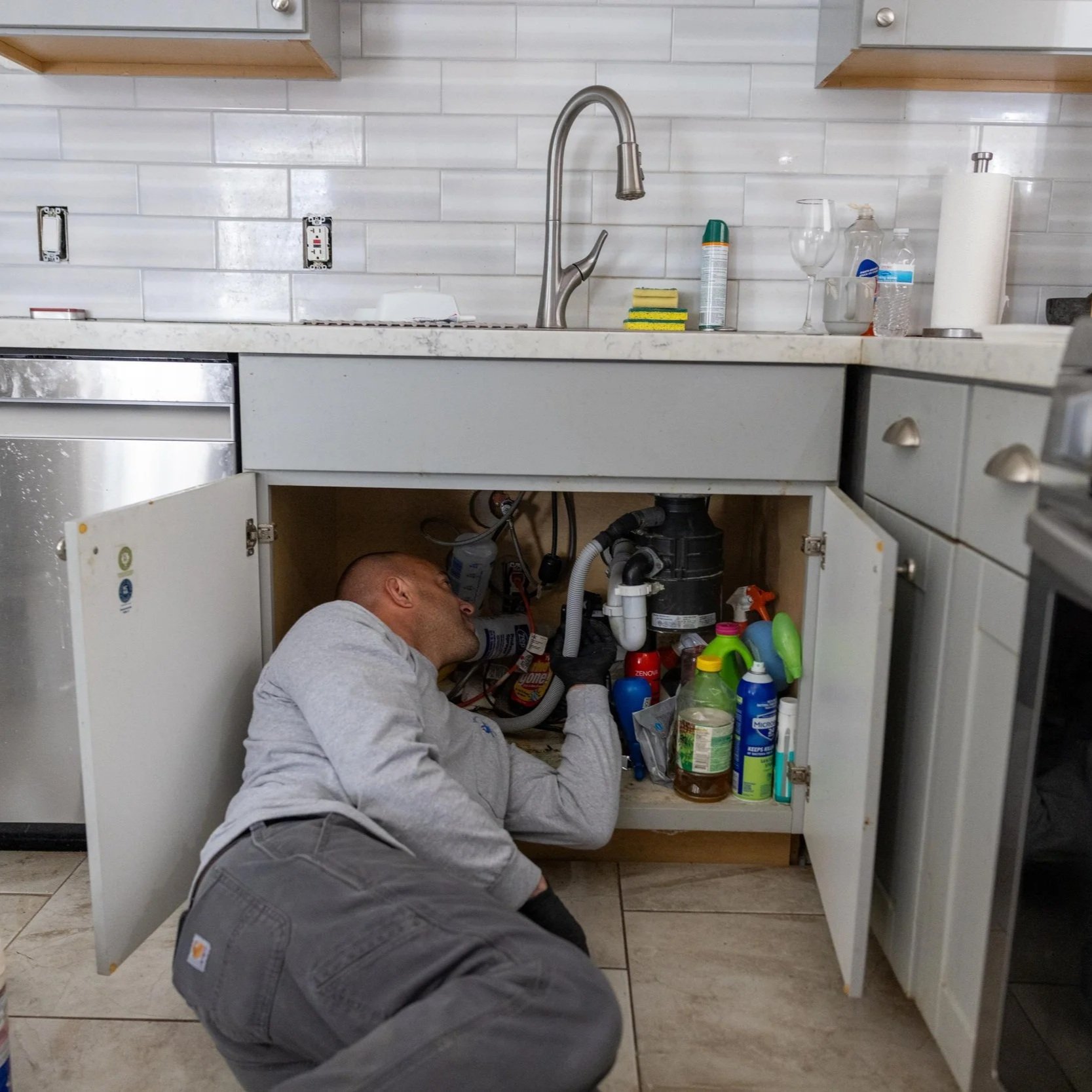
Plumber inspecting pipes under kitchen sink to diagnose recurring leak, highlighting need for professional residential plumbing repair instead of temporary fixes.
When The Same Leak Keeps Coming Back
One of the clearest signs that you need professional residential plumbing repair is repetition. If you have tightened a connection, replaced a washer, or applied plumber's tape multiple times and the leak keeps returning, the issue likely runs deeper than the visible joint.
Leaking under sinks often stems from misaligned pipes, worn-out shutoff valves, or deteriorating supply lines. You might temporarily stop the drip, but internal corrosion or line stress continues. Over time, even a small drip can soak cabinet bases, weaken particleboard, and create musty odors that are difficult to eliminate.
Homeowners often search, "Why does my sink keep leaking even after I fix it?" The answer is usually structural rather than cosmetic. Residential plumbing repair addresses the root cause by evaluating the entire assembly, not just the visible connection.
Slow Drains That Are More Than A Minor Clog
A slow drain in a bathroom sink or shower might seem harmless at first. Many people reach for chemical drain cleaners or a small hand snake. If the drain clears and then slows again within weeks, that pattern suggests a deeper blockage.
Recurring slow drains often indicate buildup further down the line or venting issues that affect proper flow. Chemical cleaners may remove surface debris, but they can also damage pipes over time. Repeated use weakens joints and increases the likelihood of leaks.
Residential plumbing repair for chronic drainage problems typically involves a more thorough inspection of the line. Professional equipment can identify whether grease, hair, mineral deposits, or even tree roots are restricting flow. Addressing the obstruction completely prevents repeated frustration and reduces long-term pipe damage.
Water Pressure That Drops Without Warning
Low water pressure is one of the most common complaints homeowners express. You turn on the shower expecting a steady stream, and instead you get a weak spray that barely rinses shampoo from your hair. That daily inconvenience adds up.
Pressure issues can stem from corroded supply lines, partially closed valves, failing pressure regulators, or hidden leaks. Temporary fixes, such as replacing a showerhead, may offer a slight improvement, but they rarely solve systemic issues.
When pressure drops suddenly or fluctuates while other fixtures are running, the system is signaling an imbalance. Residential plumbing repair can identify whether the issue involves pipe sizing, buildup, or pressure regulation. Ignoring these signs may lead to further deterioration and eventual pipe failure.
The Common Mistake Of Overusing Quick Fix Products
Many homeowners believe that if a product is sold at a hardware store, it must be safe for regular use. Chemical drain cleaners, leak sealants, and pipe patches often promise fast relief. While some may offer temporary improvement, repeated reliance on them can cause more harm than good.
Chemical cleaners are especially problematic. They generate heat and corrosive reactions inside pipes. Over time, that damage weakens the interior surface and shortens the pipe's lifespan. Leak sealants can mask active leaks while water continues to travel behind walls.
Residential plumbing repair focuses on lasting solutions. Replacing damaged sections of pipe or mechanically clearing blockages protects the system rather than gradually degrading it. Shortcuts may feel convenient, but they often increase the scope of future repairs.
Unusual Sounds You Should Not Ignore
Gurgling drains, banging pipes, or whistling noises when fixtures operate are often dismissed as minor annoyances. However, these sounds frequently signal pressure imbalances or air trapped in the system.
Gurgling drains can indicate improper venting or partial blockages. Banging pipes, often referred to as water hammer, occur when water flow stops abruptly, creating a pressure shock inside the line. Over time, repeated shock can loosen joints and increase leak risk.
Homeowners might search, "Why are my pipes making noise at night?" The answer may involve expansion and contraction as temperatures shift or pressure changes in the system. Residential plumbing repairs can address these mechanical stressors before they lead to structural damage.
Stains, Odors, And Soft Spots In Floors
Water damage rarely announces itself loudly at first. You may notice a faint discoloration on the ceiling below a bathroom. A slight musty smell may develop near a wall. Flooring might feel slightly soft near a toilet or sink.
These subtle signs often indicate hidden leaks. Temporary measures like tightening bolts or resealing fixtures may not resolve underlying pipe failures. Water that seeps into subflooring can compromise structural integrity and create mold concerns.
Residential plumbing repair involves accurately locating the source. Professionals use moisture detection tools and inspection techniques to identify leaks behind walls or under floors. Acting early prevents more extensive reconstruction later.
When Small Problems Start Affecting Your Routine
One question homeowners rarely ask directly is, "Why is my plumbing problem disrupting my day?" Yet that is often the turning point. When you begin adjusting shower schedules because pressure drops, or avoiding a specific faucet because it leaks, the inconvenience becomes part of daily life.
Living with a plumbing issue is a clear sign that it requires more than a quick fix. Residential plumbing repair restores normal function, so you do not have to plan your routines around system limitations.
Frustration, loss of convenience, and rising utility bills are emotional signals as much as technical ones. Plumbing systems are meant to operate quietly in the background. When they repeatedly demand attention, they need a proper evaluation.
Why Professional Diagnosis Matters
Plumbing systems are interconnected. A leak in one area can affect pressure in other areas. A blockage in a branch line may indicate a buildup in the main drain. Attempting isolated fixes without understanding the full system can create mismatched components and uneven performance.
Professional residential plumbing repair begins with diagnosis, not assumptions. Identifying pipe materials, checking pressure levels, and inspecting vent configurations provide a complete picture. That clarity prevents unnecessary repairs and targets the real problem.
At Plumbing Professionals, we approach each issue methodically. We listen to what homeowners are experiencing, thoroughly inspect, and explain our findings in plain language. Transparency builds trust and helps homeowners feel confident about moving forward with repairs.
Preventing Emergencies Through Timely Repair
Minor issues often escalate when left unaddressed. A small leak can evolve into a burst pipe. A slow drain can turn into a complete backup. Proactive residential plumbing repairs reduce the likelihood of emergency pipe-burst repair situations that require immediate, disruptive intervention.
Seasonal changes can amplify vulnerabilities. Temperature fluctuations cause pipes to expand and contract. Older materials are especially prone to stress. Addressing weak points before extreme conditions occur protects the home from sudden failure.
Taking action early is not about overreacting. It is about recognizing patterns and responding before inconvenience turns into costly damage.
