
What Happens When Your Plumbing System Fails A Code Inspection?
You thought the remodel was basically done, and then the inspector walked through your bathroom, shook his head, and left a correction notice on the counter. Now you are staring at a red tag, a stalled project, and wondering how something inside your walls just failed without you even knowing it.
A failed plumbing inspection is not just paperwork. It can delay renovations, prevent you from closing on a home sale, or even require opening up finished walls to fix hidden issues. The primary frustration is the unexpected setback. The secondary impact is financial and logistical. Contractors may have to return. Materials may need to be replaced. Plumbing code compliance corrections become urgent instead of optional. Understanding what happens next helps you respond quickly and avoid repeat failures.
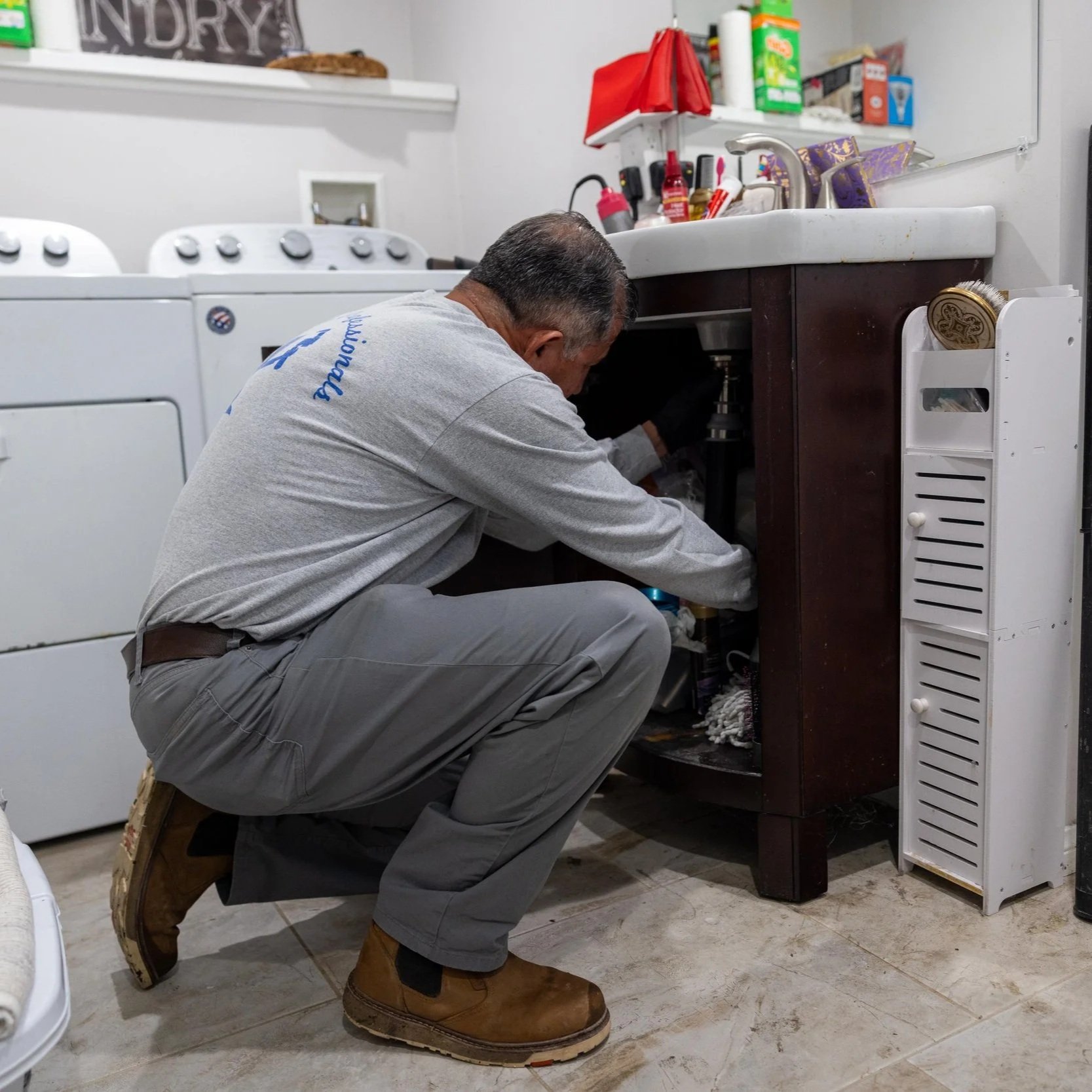
Plumber inspecting plumbing connections in laundry room during repair work after failed inspection to ensure proper plumbing code compliance.
Why Plumbing Inspections Fail In The First Place
Homeowners often ask, "Why would my plumbing fail inspection if everything seems to work?" Function and code compliance are not the same thing. A faucet can run perfectly even when it's connected improperly behind the wall. A drain can carry water away while violating venting or slope requirements.
Plumbing codes exist to protect health, safety, and long-term performance. They address water supply protection, drainage flow, venting, backflow prevention, pipe support, and approved materials. Many violations are not obvious to the untrained eye. An inspector may flag improper pipe sizing, missing cleanouts, incorrect slope, or unsupported lines.
Plumbing code compliance corrections are required because small technical mistakes can lead to significant problems later. Poor venting may allow sewer gas to enter the home. An incorrect drain slope can cause chronic clogs. Improperly installed water heaters may present safety hazards. Inspection failure is not about inconvenience. It is about preventing long-term risk.
The Immediate Consequences Of A Failed Inspection
When a plumbing system fails inspection, work often stops. In remodels or additions, other trades may be unable to continue until plumbing corrections are made. Drywall may not be installed. Cabinets may not be set. Flooring may remain unfinished.
If the inspection is tied to a real estate transaction, the pressure increases. Buyers may hesitate. Lenders may delay funding. Closing dates can shift. What began as a simple remodel or repair becomes a disruption to the timeline.
Plumbing code compliance corrections must typically be completed before a reinspection is scheduled. That means identifying each violation, correcting it properly, and coordinating another inspection visit. Delays often occur when homeowners underestimate the scope of required changes.
The Common Mistake Of Choosing The Cheapest Installer
One of the most common scenarios we see is homeowners choosing the lowest bid for plumbing work during a renovation. The assumption is that plumbing is plumbing, and if water flows, the job is done. That mindset often leads to inspection failures.
Cheaper work sometimes skips proper venting, uses incorrect fittings, or avoids pulling required permits. It may look clean on the surface, but it falls short behind walls. When the inspector identifies those issues, the cost of corrections often exceeds the savings from the original low bid.
Plumbing code compliance corrections frequently involve opening finished surfaces to access concealed piping. That adds labor, materials, and time. Hiring qualified professionals from the beginning reduces the risk of failed inspections and costly rework.
What Inspectors Actually Look For
Homeowners often wonder, "What does a plumbing inspector even check?" Inspectors review water supply lines for proper sizing and approved materials. They confirm that drain and vent systems are correctly configured. They evaluate pipe support spacing and check for proper slope in drainage lines.
They also verify that fixtures have appropriate trap configurations and that cleanouts are accessible. Water heaters must meet safety standards, including temperature and pressure relief valve discharge requirements. Backflow prevention devices must be installed correctly to protect potable water.
Plumbing code compliance corrections may be required for issues you never see during daily use. A drain that appears to function fine may lack proper venting. A pipe may be installed without adequate clearance from framing. Inspectors focus on compliance, not convenience.
The Cost Of Ignoring A Failed Inspection
Ignoring a failed inspection is not a practical option. Municipalities may withhold final approvals, which can affect property records and occupancy permissions. In some cases, fines may apply for unpermitted or noncompliant work.
Beyond regulatory concerns, unresolved violations can create real performance problems. Improperly installed plumbing systems are more likely to leak, clog, or fail prematurely. Structural damage from undetected leaks can cost far more than the original correction.
Plumbing code compliance corrections protect both property value and occupant safety. Addressing issues promptly prevents minor technical violations from escalating into major functional failures.
How Plumbing Code Compliance Corrections Are Handled
Once you receive a correction notice, the first step is reviewing each item carefully. The inspector's report typically lists specific violations and references applicable code sections. Understanding the exact issue helps determine the appropriate fix.
Professional plumbers evaluate the flagged areas and recommend corrective action. In some cases, minor adjustments resolve the issue. In others, sections of piping may need to be reconfigured or replaced. Accessing concealed plumbing may require removing drywall or flooring.
At Plumbing Professionals, we approach corrections methodically. We confirm the scope, make precise adjustments, and verify compliance before scheduling reinspection. Clear communication with inspectors reduces the risk of repeat failures.
Timing And Reinspection Considerations
After plumbing code compliance corrections are completed, a reinspection must be scheduled. Inspectors will review the previously flagged items and confirm that they now meet code standards. If additional issues are discovered, further corrections may be required.
Homeowners often ask, "How long does it take to pass reinspection?" The timeline depends on the complexity of the corrections and the inspector's availability. Acting quickly and thoroughly addressing all items improves the chances of passing on the first reinspection attempt.
Preparation matters. Before the inspector returns, verify that access to corrected areas is available. Clear away tools and debris. An organized presentation supports a smooth review process.
Long-Term Benefits Of Passing Inspection
While a failed inspection feels frustrating, it also presents an opportunity. Code compliance improves system reliability and safety. Correctly installed venting reduces odors and drainage issues. Proper pipe support reduces stress and the risk of leaks. Approved materials extend system lifespan.
Homeowners sometimes view inspections as obstacles. In reality, they serve as quality control checkpoints. Plumbing code compliance corrections strengthen the system and protect your investment.
Passing inspection provides confidence that the plumbing system meets current safety and performance standards. That reassurance matters not only for current occupancy but also for future resale value.
Preventing Future Inspection Failures
To reduce the likelihood of future issues, always confirm that permits are pulled when required. Work completed without proper permits increases the risk of surprise violations later. Choose licensed professionals familiar with local codes and inspection processes.
Ask questions about materials and venting configurations. Request confirmation that installations meet current standards. Documentation and transparency reduce misunderstandings.
Plumbing code compliance corrections are far less stressful when viewed as part of a larger commitment to system integrity. Proper planning, qualified installation, and clear communication with inspectors minimize setbacks and protect long-term performance.
