
Sewer Camera Inspection Before Buying a Home: 7 Hidden Faults
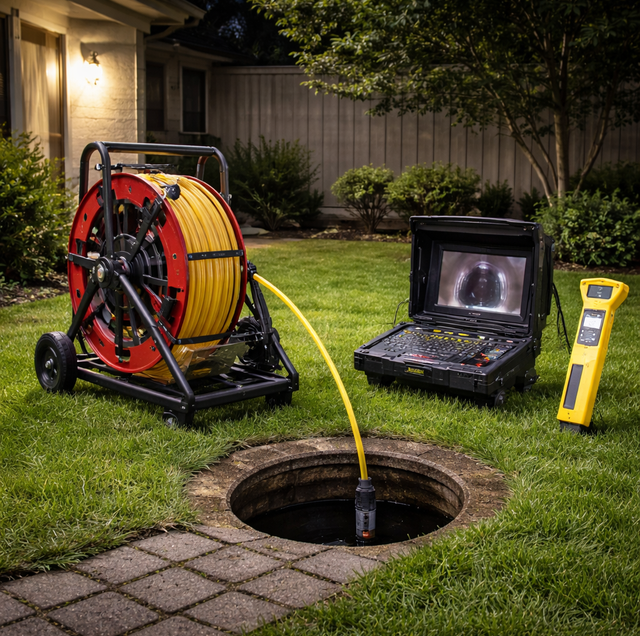
Quick Answer: A standard home inspection stops at the walls of the house. It does not send anything down the underground sewer lateral, the private pipe that carries waste from the building to the city main. A camera inspection is a separate scope: a plumber pushes a small waterproof camera through the line and watches a live feed for root intrusion, cracks, collapse, sags, and bad joints. Buyers order one because a hidden defect in that pipe is the buyer's problem the day after closing, and it rarely shows up any other way.
What a Standard Home Inspection Actually Skips
A general home inspector is a broad generalist. The report covers the roof, the electrical panel, the visible plumbing under sinks, water pressure at the fixtures, and the condition of the water heater. All of it is above ground and reachable by eye or hand.
The sewer lateral is none of those things. It runs from a cleanout near the foundation, out under the yard, driveway, or landscaping, and ties into the municipal main in the street. Most of it sits three to six feet underground with no way to see it. A home inspector cannot report on a pipe they cannot access, so the standard report says nothing about it, and a clean inspection report tells you nothing about the line's condition.
That gap matters because the lateral is one of the few components a homeowner owns all the way to the street connection in most areas, and repairs on it are among the more disruptive a house can face. A working toilet on inspection day proves water flows out. It does not prove the pipe is intact fifteen feet past the wall.
How the Camera and Locator Work
The tool is a push camera: a waterproof lens and LED ring on the end of a flexible fiberglass rod, fed into the line through the cleanout or a pulled toilet. The plumber pushes the head through the pipe by hand while a monitor shows the live interior, and a counter on the reel reads out how many feet of cable have gone in, so every finding gets a distance.
The second tool is the locator. The camera head carries a small radio transmitter called a sonde. A handheld receiver held over the yard picks up that signal and marks the exact spot and depth of the camera above ground. When the scope finds a defect at, say, twenty-two feet, the locator turns that into an X on the lawn and a depth reading, so any future repair is a targeted dig rather than a guessing game across the whole run.
A useful scope needs the line reasonably clear. If standing water or a heavy blockage fills the pipe, the plumber may recommend clearing or hydro-jetting it first so the camera can actually see the pipe walls instead of a murky pool.
What the Scope Finds
Once the camera is moving, a trained eye reads the pipe the way a mechanic reads an engine. A few findings come up again and again.
Root Intrusion: Tree and shrub roots chase the moisture and nutrients inside a sewer line. They enter through joints and hairline cracks as fine hairs, then thicken into ropes and mats that snag paper and grease. On camera, roots look like a beard hanging into the flow. Light root intrusion can be cut and maintained; heavy intrusion usually means the joint or pipe wall has already failed enough to let them in.
Cracks and Collapse: Longitudinal cracks, spider-web fractures, and missing sections of pipe wall show up as dark gaps or displaced shards. A full collapse looks like a wall of dirt where the pipe should continue. Collapse stops the camera cold and is one of the clearest signals that a section needs replacement rather than cleaning.
Bellies and Sags: A belly is a low spot where the ground settled, and the pipe lost its downhill slope. Waste and water pool there instead of draining, so the camera shows standing water that does not clear. Small bellies get managed with routine cleaning; a deep one that traps solids is a recurring backup problem that cleaning will never fully solve.
Offset Joints: When two pipe sections shift out of alignment, the camera bumps over a lip at the seam. That offset catches debris, invites roots, and can leak into the surrounding soil. A minor offset may be livable; a severe one behaves like a partial dam.
Grease, Scale, and Buildup: Congealed grease coats the pipe and narrows the opening. In older metal pipe, mineral scale and corrosion build up as a rough, flaking crust that shrinks the diameter. Both restrict flow, and both are usually cleanable, which makes them very different findings from a crack or a belly.
The Connection to the City Main: A good scope runs all the way to where the lateral meets the municipal main. Problems cluster at that far end: a poor tap, root intrusion at the connection, or a break right before the main. Because it is the deepest and farthest point, it is also the most expensive place to have trouble, which is exactly why the camera should reach it rather than stopping halfway.
What the Pipe Material Tells You
The camera also reveals what the line is made of, and the material is a strong predictor of remaining life.
Orangeburg is a pipe made from wood fiber and tar, used in some mid-century construction. It softens and deforms with age, going oval and then flattening. Finding Orangeburg on camera is a red flag on its own, because the material is at or past the end of its service life almost everywhere it still exists.
Clay is common in older homes. It resists corrosion and can last a long time, but it is brittle and jointed every few feet, and those joints are the classic entry point for roots. Clay in good shape can serve for decades; clay riddled with root-invaded joints is a slower-motion version of the same problem.
Cast iron was widely installed for laterals and drains. It is strong but corrodes from the inside, scaling and eventually flaking into a rough, narrowed channel. A cast-iron line can look fine one year and channel badly the next.
Modern plastic (ABS or PVC) is smooth, corrosion-proof, and jointed with solvent-welded fittings. A plastic line in good condition is the reassuring find. Seeing it means a previous owner likely already replaced the lateral.
Reading the material is like checking the birth year and history on a used car before you trust the odometer. Two houses can look identical at the curb while one hides brittle clay and the other hides fresh PVC.
Cleanable Clog Versus Structural Defect
The single most useful thing a scope sorts out is whether a problem is a maintenance item or a repair. That distinction drives every decision that follows.
A cleanable clog is a soft or removable obstruction: grease, paper, fine roots, or scale that a cabling or hydro-jetting service can clear. The pipe underneath is still sound. These are ongoing housekeeping issues, annoying but predictable, and they do not by themselves mean the pipe is failing.
A structural defect is damage to the pipe itself: a crack, a collapse, a deep belly, a severe offset, or degraded Orangeburg. No amount of cleaning fixes structure. These findings point toward repair or replacement, whether by traditional excavation or a trenchless method.
The reason the camera is worth ordering is that a backup on move-in day feels the same either way. Only the scope tells you whether you bought a pipe that needs a cleaning schedule or a pipe that needs to be rebuilt.
Why the Buyer Should Order the Scope, and the Room It Creates
A seller has little reason to volunteer a scope, and a seller's inspection is not a substitute for one you control. As the buyer, you are the party who inherits whatever the line hides, so you are the one who should commission an independent inspection and get the raw footage, not just a verbal summary.
The findings are also negotiating room. A recorded structural defect, tied to a located spot and a depth reading, is concrete evidence during the inspection contingency window. In general terms, that evidence can support asking the seller to repair the line before closing, to credit the work, or to reprice, and it lets you walk in with facts instead of a hunch. A vague worry gets waved off; a video of a collapsed joint at twenty-two feet does not.
Have the scope done inside your inspection period, while you still have the contractual room to act on what it shows.
Limits of a Camera Inspection
A scope is powerful, but it is not X-ray vision, and honest expectations keep you from over-reading it. The camera sees the inside surface of the pipe, not the soil around it or the wall thickness from outside, so it can miss a small exterior leak that has not yet broken through. It cannot pass a hard blockage or a collapse, which means the pipe beyond that point goes unseen until the obstruction is cleared. A line too full of water hides its own walls until it is drained or jetted. And a camera reports condition on the day of the scope; it is a snapshot, not a warranty against a root that pushes in next season.
None of that is a reason to skip it. It is a reason to treat the scope as expert diagnosis rather than a guarantee, and to let a licensed plumber interpret the footage instead of guessing from a still frame.
A sewer line is a confined space that can hold sewer gas, and cleanouts sit under pressure when a line is blocked. Reaching into a cleanout or opening a backed-up line is not a homeowner task, so leave scoping, clearing, and repair to a licensed professional with the right equipment.
Frequently Asked Questions
Yes, and it is one of the few plumbing checks that does not need live water service, because the camera reads the empty pipe directly. The plumber may pour a controlled amount of water down the line to reveal a belly, since a low spot only shows as standing water once there is water to pool. A completely dry line can actually hide a shallow sag that a little water would expose.
Even short runs are worth scoping, but the payoff climbs with length and with the number of connections. A lateral over roughly fifty feet, or one that crosses under a driveway, a mature tree, or an addition, carries more places to fail and more expensive access, so the information value is highest exactly where the dig would be worst.
It can. A dated, located video establishes the line's baseline condition at purchase, which is useful evidence if you later add a service-line endorsement to your policy or file a claim. Insurers often distinguish sudden damage from long-term deterioration, and a scope from closing day helps show which one you are dealing with.
A two-way cleanout is a fitting with two access openings that let a camera or cable run both toward the house and toward the street from one spot. Many older homes lack one, so the plumber may have to pull a toilet to get the camera in. If a scope reveals no accessible cleanout, adding a two-way cleanout is often suggested to make every future service faster.
No. A shallow belly that holds only a thin film of water can be managed for years by jetting it clean on a schedule before solids build into a blockage. When one does need correcting, the fix is often a spot repair rather than a full replacement: the locator on the camera head pinpoints the exact depth and footage, so a crew opens only that single section of yard instead of the whole run. The dig-versus-maintain call comes down to how deep the sag sits and whether solids keep collecting in it.
It can locate where the trouble sits relative to the property line and the tap into the main, which points to who is responsible. If the located defect falls on your side of the connection, it is generally the homeowner's line; if it sits at or past the city tap, the municipality may own that segment. Knowing which side the footage shows can decide who pays for the fix entirely.
Book a pre-purchase sewer scope before you sign — know exactly what is under the yard before it becomes your problem. Plumbing Professionals serves Pasadena, Altadena, South Pasadena, and surrounding areas. Call (626) 247-3401.
