
How Plumbers Pinpoint a Slab Leak Without Tearing Up the Floor
Quick Answer: A plumber finds a slab leak without jackhammering the whole floor by first proving a leak exists, then narrowing down where it is. Shutting the water off at the meter and watching the dial shows whether water is escaping. Isolating the hot and cold lines under pressure tells which side is leaking. Then, acoustic listening gear, thermal cameras, and sometimes tracer gas pinpoint the spot to within a few inches, so only a small square of concrete gets opened over the actual break instead of the room.
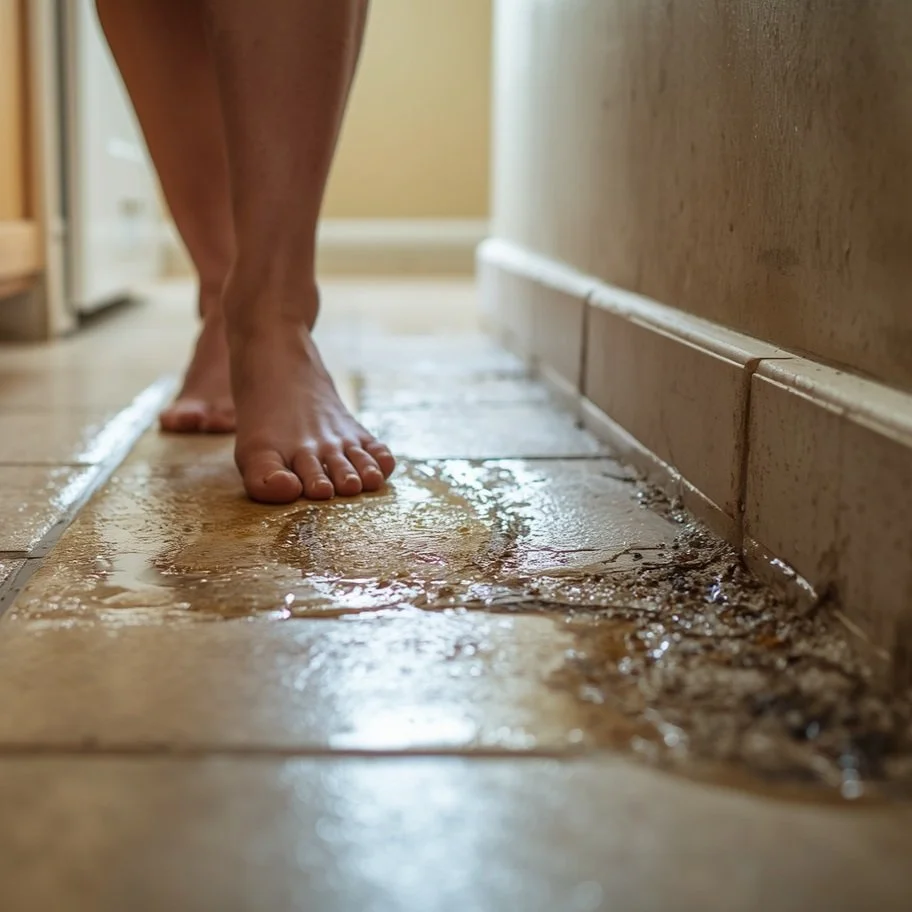
You set a bare foot down in the hallway, and one patch of tile is warm, like something under it is running. The water bill jumped, nobody changed their habits, and there's a faint hiss in a quiet house at night. That's the start of a slab leak, a pipe leaking under the concrete your house sits on. The good news is that a plumber doesn't have to open the whole floor to find it. The work is mostly detective work, and the digging comes last.
Why a Pipe Under the Slab Springs a Leak in the First Place
Most homes built before the 1970s, and plenty after, route copper supply lines through or just under the concrete slab. The pipe sits in or against the concrete for decades while hot and cold water cycle through it. Two things wear it down. Copper expands when it carries hot water and shrinks as it cools, so a hot line rubs against the rough concrete or a bit of rebar with every cycle, slowly wearing a thin spot until it weeps. That's why hot-side leaks are more common than cold.
The other killer is water chemistry. In hard-water areas, minerals and a slightly aggressive pH eat at copper from the inside, thinning the wall until a pinhole opens. Once water escapes under the slab, it has nowhere to go but sideways and up, which is what gives you a warm floor, a damp carpet edge, or a hairline crack that wasn't there last year.
Here's the part that trips people up. A slab leak rarely announces itself with a puddle. It hides under several inches of concrete and shows up as side effects: a meter that creeps, a water heater that runs more than it should on the hot side, and pressure that sags. Reading those clues is how a plumber decides where to even start looking.
Match the Symptom to What It's Telling You
Before any equipment comes out, a plumber reads the symptoms. Each one narrows the search.
| What you notice | What it usually points to | What it rules in or out |
|---|---|---|
| Warm or hot spot on the floor | Leak on the hot-water line under the slab | Tells the plumber to test the hot side first |
| The water meter dial moves with everything shut off | Active leak somewhere on the supply side | Confirms a leak exists before any digging |
| Sudden drop in water pressure | A break large enough to bleed off volume | Suggests a sizable leak, not a slow weep |
| Sound of running water in a quiet house | Pressurized water escaping under the slab | Gives the acoustic gear a target area |
| Damp carpet, buckled wood, or a new floor crack | Water migrating up from the break | Marks the rough zone, not the exact spot |
Step One: Prove There's Actually a Leak
The first move costs nothing and rules out a wild goose chase. The plumber shuts off every fixture and watches the water meter. If the little flow indicator keeps spinning with the whole house off, water is escaping somewhere on your side of the meter. That's the difference between a real slab leak and a running toilet flapper you never noticed.
Next comes isolation. Your home has two supply lines running through the slab, hot and cold. The plumber caps and pressurizes one side at a time with a gauge, usually around 60 to 80 PSI, then watches whether the needle holds or drops. A pressure drop on the hot side and a steady cold side tell the story before anyone has touched the floor. This single test often cuts the search area in half.
Step Two: Listen for It
Pressurized water forced through a pinhole makes noise, a high hiss or a low rush, depending on the size of the break. The trouble is you can't hear it through a slab with your ear. So plumbers use acoustic listening equipment, a sensitive ground microphone that amplifies the sound of escaping water and filters out everything else.
The plumber moves the sensor across the floor in a grid, watching a readout climb as it nears the leak and fade as it moves away. Think of it like a metal detector, except it's chasing the sound of water instead of the ping of a coin. When done patiently, this reduces the location to a small zone, often within a foot or two.
Step Three: Confirm With Heat and, Sometimes, Gas
Sound alone can bounce around under concrete, so a second method confirms the first. A thermal imaging camera reads surface temperature. A hot-water leak warms the concrete and the floor above it, and the camera shows that as a bright bloom against the cooler floor around it. The line that warms up with the spot the acoustic gear flagged, and confidence goes way up.
For a cold-water leak or a stubborn case where heat and sound disagree, a plumber may use tracer gas. After draining the line, a safe, non-toxic mix of hydrogen and nitrogen gets pumped in. The tiny gas molecules slip through the same break the water did and rise up through the concrete, where a gas detector sniffs them out at the surface. It's the most precise method going, and it works whether the line is hot or cold.
With acoustic listening, thermal imaging, and tracer gas stacked together, a good plumber can mark a slab leak to within a few inches before opening any concrete.
Step Four: Open Only What You Have To
Once the spot is marked, the repair becomes surgical instead of destructive. Where the location is pinpointed, and the rest of the pipe is sound, a plumber cuts a small square of flooring and concrete directly over the break, repairs that section, and patches it. You lose a tile or two, not a room.
But pinpointing doesn't always mean digging is the smart fix. When a pipe has already failed once, and the rest of it is the same age in the same aggressive water, opening the slab repeatedly is a losing game. In that case, a plumber may reroute the line, running fresh pipe up a wall, through the attic, and back down to where it's needed, abandoning the bad run under the slab entirely. No floor gets opened at all. For homes with several aging slab-routed lines, repiping the supply system is sometimes the call that ends the cycle for good. A camera-and-detection workup is what tells your plumber which of those three roads makes sense.
Frequently Asked Questions
Yes. The detection work, watching the meter, pressure-isolating the hot and cold lines, acoustic listening, thermal imaging, and tracer gas, all happen with the floor intact. Concrete only gets opened at the end, over the spot the equipment marked, and only if a spot repair is the chosen fix. A reroute opens no floor at all.
With more than one method stacked together, a skilled plumber can usually mark the leak to within a few inches. Acoustic listening gets the general zone, thermal imaging confirms a hot-water leak by its warm bloom, and tracer gas pinpoints the exact break. The accuracy is what keeps the concrete cut small.
A warm spot on the floor, a water bill that climbed with no change in use, a drop in water pressure, the sound of running water when everything is off, and damp or buckling flooring. Any one of these on its own can have another cause, but together they point to the slab. The meter test settles it quickly.
It's urgent, not necessarily a middle-of-the-night emergency. Water escaping under the slab can undermine the soil, damage flooring, and feed mold, and the longer it runs, the worse and pricier the damage. It won't flood the house in an hour like a burst line above ground, but it shouldn't wait weeks either. Get it located and addressed promptly.
That depends on the pipe's age and the water it sits in. A single leak in an otherwise sound line is a fair candidate for a spot repair. But a pinhole in old copper sitting in hard water often means more pinholes are coming, and rerouting or repiping that line ends the repeat visits. A plumber weighs the pipe's condition before recommending one over the other.
Coverage varies widely by policy, and many cover the cost of accessing and repairing the leak, the tear-out, and the patch more readily than the pipe itself. This is a question for your insurer, not your plumber, since the terms differ from one policy to the next. A plumber can document the leak and the work for your claim.
Knowing Where to Cut Is the Whole Job
A slab leak feels like the kind of problem that ends with your floor in pieces. It rarely does. The skill is in finding, proving the leak is real, isolating the side, then listening and imaging until only a few square inches of concrete need to come up. Do the detective work first, and the repair is small. Skip it and start swinging a hammer, and you're guessing with a sledgehammer in your hand.
Have a warm floor, a creeping water bill, or the sound of water you can't trace? — Get the leak located precisely before any concrete is touched. Plumbing Professionals serves Pasadena, Altadena, South Pasadena, and the surrounding areas. Call (626) 247-3401.
