
Sewer Backing Up Every Few Months? What Keeps Doing It
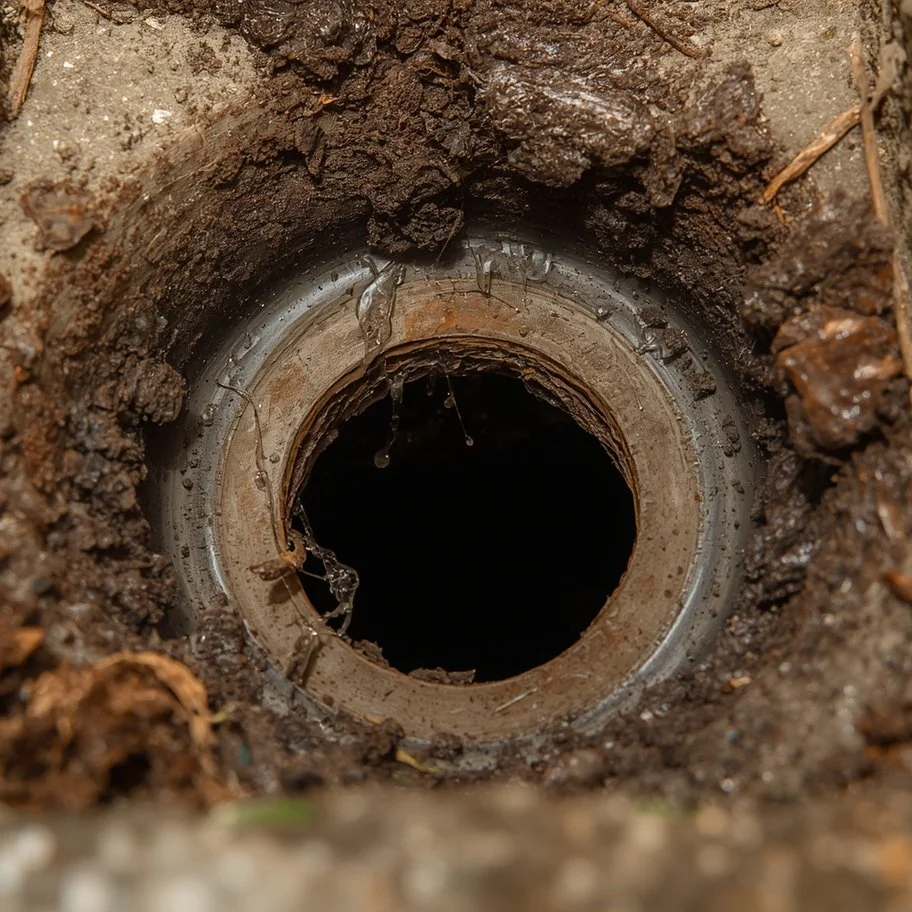
Quick Answer: A sewer line that backs up every few months almost never has a one-off clog. The repeat means something structural is wrong with the pipe itself: tree roots that regrow into the same crack after each cleaning, a low spot where the pipe has sagged and collects waste, or grease and scale narrowing an old line. A drain snake clears the symptoms but leaves the cause, so the backups return on a schedule. A camera inspection is what tells you which one you're fighting.
The first backup felt like bad luck. A plumber ran a snake, the drain cleared, and everybody moved on. Then four months later, the toilet gurgles, the shower drain burps up gray water, and you're standing in the same mess, wondering why. That pattern, clear it, lose it, clear it again, is the tell. A sewer that backs up on a rough schedule isn't getting clogged by accident. Something is wrong with the pipe itself, and the clog is just the part you can see.
A Snake Treats the Clog, Not the Reason for It
Here's what a basic drain cleaning actually does. The cable spins down the line, punches a hole through whatever is blocking it, and the water rushes past. Relief is instant. But the snake bores a channel through the blockage; it doesn't remove what caused the blockage to form. If roots are growing through a crack, the cable shears off the roots in the pipe and leaves the ones outside it to grow right back. If the pipe sags and collects waste, the snake clears the pile, and the next pile starts forming the same day.
So the question worth answering isn't "what clogged it" but "what keeps catching the debris." That answer is almost always one of a handful of structural problems, and in older homes, one shows up far more than the rest.
Start With the Symptom Pattern
What you see and hear narrows it down before a camera ever goes into the line.
| What's happening | Likely cause | What it means for the fix |
|---|---|---|
| Backs up every few months, worse in spring | Tree roots regrowing into a cracked joint | Roots need cutting plus the crack sealed or lined |
| Multiple drains gurgle, lowest one overflows first | Main line blockage, not a single fixture | Problem is the shared sewer, not one drain |
| Slow recovery, recurring grease smell | Grease and scale narrowing an old pipe | Needs jetting and descaling, not just a snake |
| Backups with no roots and no grease | Bellied (sagged) pipe holding water and waste | Section likely needs replacement or lining |
| Sewage backs up after heavy rain | Cracked pipe letting groundwater in, or a city issue | Camera tells whether it's your line or the main |
The Usual Culprit in an Older Home: Tree Roots
If your home was built before the 1970s, the line running to the street is probably clay or early cast iron, joined in short sections with joints every few feet. Those joints are the weak point. Roots from parkway trees and big yard trees don't attack a solid pipe; they follow moisture. A sewer line leaks a little vapor and warm, nutrient-rich water at every joint, and a root tip finds that seam, slips into the hairline gap, and then does what roots do: it swells.
Once inside, a root fans out into a fibrous mat that works like a net. Toilet paper, grease, and grit catch on it, the mat thickens, and the flow drops until the line backs up. Cut it with a snake, and you've trimmed the hedge, not pulled it. The root crown outside the pipe is untouched, so it regrows into the same warm, wet crack, and you're back in a few months. Spring backups are a giveaway; that's when roots grow fastest.
When It's Not Roots: Sags, Grease, and Old Pipe
A bellied pipe is the quiet one. Over decades, soil shifts or settles, and a section of the line drops into a shallow low spot. Water still flows through, but solids settle in the dip instead of washing onto the street. The belly fills, backs up, gets cleared, and fills again, like a clogged gutter that pools at the same sag every rain. No amount of snaking fixes a belly because the problem is the pipe's shape, not anything stuck in it.
Grease and scale are the slow squeeze. Kitchen grease goes down hot and liquid, then cools against the pipe wall and hardens into a waxy layer that grabs everything sliding past. In old cast iron, the inside of the pipe also corrodes into rough, crusty ridges called tuberculation that catch debris the same way. Both shrink the working diameter of the pipe until a normal flush is too much for it. Clearing that takes hydro jetting, a high-pressure water stream that scours the walls back to bare pipe, and sometimes mechanical descaling first.
Why a Camera Inspection Ends the Guessing
You can't fix what you can't see, and every one of these causes looks identical from the bathroom, a backup. A sewer camera, a waterproof video head on a flexible cable, goes down the line and shows exactly what's there: the root mat at the third joint, the dip holding standing water, the crusted-over cast iron, the crack letting groundwater in after rain. A locator on the camera head also marks how deep and how far down the yard the trouble sits, measured in feet from the clean-out.
That single look changes everything about the repair. Roots at one cracked joint might get cut, and the joint spot-lined. A grease-choked line gets jetted. A bellied or collapsed section gets replaced or relined. Without the camera, you're paying for repeat snakings forever and never touching the reason they're needed.
Do not pour chemical drain cleaner down a recurring main-line backup. It rarely clears a structural blockage, the caustic liquid pools against the pipe and your fixtures, and it makes the standing water dangerous for the plumber who has to clear the line by hand.
Frequently Asked Questions
Because snaking clears the clog but not the reason it forms. If roots are growing through a cracked joint, the cable trims the roots inside the pipe, and the ones outside grow right back. If the pipe sags, the snake clears the pile, and a new one starts collecting in the same low spot. The repeat is the sign of a structural problem the snake can't reach.
Roots are the most likely cause in an older home with clay or cast-iron pipe and trees in the yard or parkway. The pattern points to them, too: backups that return every few months and tend to worsen in spring, when roots grow fastest. A camera inspection confirms it by showing the root mat right at a pipe joint.
It's a section of line that has sagged into a low spot, usually from soil settling over the years. Water flows through, but solids drop out and collect in the dip instead of washing to the street. The belly fills, backs up, gets cleared, and fills again, because the problem is the shape of the pipe, not a clog. Snaking can't fix it; that section usually needs to be replaced or lined.
It depends on the cause. Jetting is the right tool for grease, scale, and a soft root mat; the high-pressure stream scours the pipe wall clean in a way a snake can't. But jetting won't fix a belly or a collapsed pipe, since those are structural. A camera inspection first tells you whether jetting solves the problem or just buys time.
A single backup with sewage coming up into the house is urgent; that's a health hazard, and it should be cleared right away. The recurring pattern itself is a strong signal to stop treating symptoms and find the cause before the next one hits at a worse time. Catching it with a camera between backups is far better than waiting for the line to fail completely.
You can reduce them. Keep grease, wipes, and fibrous food scraps out of the drains, and don't plant trees over the sewer line. But once a line has a cracked joint, feeding roots, or a sag holding waste, no household habit fixes the pipe itself. That part takes a look inside and a repair aimed at the actual defect.
Stop Clearing It and Start Looking at It
A sewer that backs up on a schedule is telling you something a snake can't fix. The clog is the symptom; the cracked joint, the sag, or the grease-choked old pipe is the reason. Each round of clearing buys a few months and changes nothing about why it keeps happening. Put a camera down the line once, find out what's actually there, and you can finally aim the repair at the problem instead of mopping up after it again.
Tired of the same sewer backup every few months? — Get a camera down the line to find the real cause, then fix it once. Plumbing Professionals serves Pasadena, Altadena, South Pasadena, and the surrounding areas. Call (626) 247-3401.
