
Is Hard Water Quietly Wrecking Your Pipes and Heater?
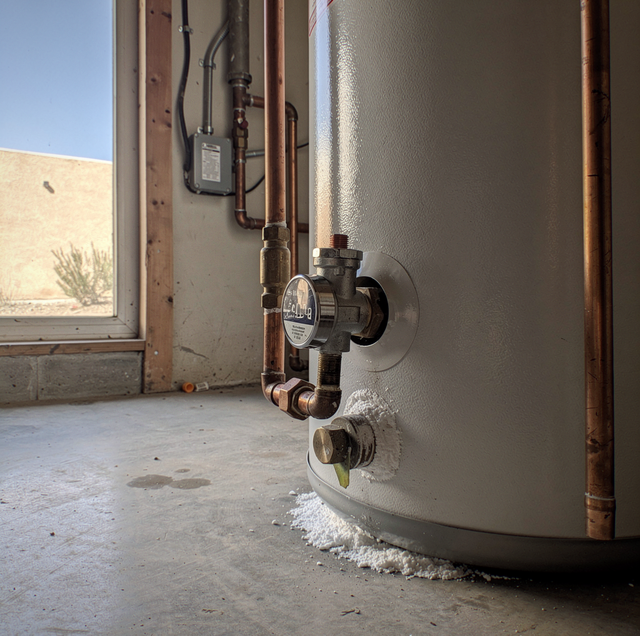
Quick Answer: Hard water is often treated as a cosmetic nuisance- spots on glasses, dull-feeling skin and hair- but the same calcium and magnesium minerals causing those surface issues also precipitate out as scale inside water heaters, pipes, and fixtures. Scale insulates a water heater's tank walls and heating element, narrows the interior of galvanized pipe, and clogs valves and cartridges faster than they'd wear in soft water. Softening or conditioning options exist for both the whole house and individual appliances, and which one actually addresses the problem depends on whether the goal is to protect plumbing or just to improve water at the tap.
The common assumption: Hard water is a cosmetic problem, spots on the shower glass, a dull feeling to skin and hair after washing, maybe a chalky residue around the faucet. Fix it with a filter pitcher or ignore it entirely; nothing serious happens. That assumption skips over what hard water is actually doing everywhere the surface staining isn't visible: inside a water heater's tank, inside the pipe walls carrying water to every fixture, and inside the valves and cartridges that control flow throughout the home.
What Makes Water "Hard" In The First Place
Water picks up dissolved calcium and magnesium as it passes through soil and rock on its way into the supply system, and the more of those minerals it carries, the "harder" it's considered. Hardness is measured in grains per gallon, and water drawn from groundwater sources in mineral-rich soil tends to run considerably harder than surface water from a reservoir with different upstream geology. That mineral content doesn't cause a problem on its own as long as the water stays at a steady temperature and pressure; the trouble starts when changes in heat or pressure cause those dissolved minerals to precipitate out of solution and form solid scale.
Inside The Water Heater: Where Scale Does The Most Damage
A gas or electric water heater's tank holds water that is heated repeatedly, and each heating cycle encourages dissolved calcium and magnesium to precipitate and settle as scale on the tank's interior surfaces and around the heating element or burner area. That layer acts as insulation between the heat source and the water, so the unit has to run longer to reach the same temperature, since it's now heating through a barrier rather than heating the water directly. A rumbling or popping sound from a water heater during operation is a fairly reliable sign of this happening: it's the sound of water boiling underneath a layer of scale, trapped steam pockets escaping rather than water heating cleanly against bare metal.
Sediment settling at the bottom of the tank compounds the issue over years, gradually reducing the tank's effective capacity and shortening its service life well below what the same unit would achieve on soft water. Tankless units face a related but different version of this problem: instead of scale settling in a large reservoir, it forms inside the narrow heat-exchanger passages the unit uses to transfer heat on demand, and because those passages are so much smaller than a tank's interior, even a modest scale buildup measurably restricts flow and drops efficiency, which is why manufacturers specify periodic descaling flushes as routine maintenance in hard water areas rather than an optional add-on.
How Scale Narrows Pipes From The Inside
Pipe material changes how visible this damage becomes. Galvanized steel pipe, common in homes built before the shift to copper, already corrodes from the inside as its protective zinc coating wears away over decades, and hard water accelerates that process by adding mineral scale on top of the corrosion. The combined effect is a pipe whose interior diameter shrinks well below its original size, which shows up as gradually reduced water pressure throughout a home even though nothing about the supply itself has changed. Copper pipe resists this kind of internal narrowing far better, though scale can still build up at fittings, valves, and any point where flow slows or turbulence increases.
Fixtures And Valves Wear Out Faster Than Expected
Aerators and showerheads are usually the first places where hard water damage becomes visible, since their small internal passages clog with mineral deposits quickly enough that a homeowner notices reduced flow within months rather than years. Less visible but more consequential is the wear inside fixture valves, toilet fill valves, faucet cartridges, and shower valve mixing cartridges, all of which rely on close-tolerance moving parts that mineral grit abrades faster than clean water would. A cartridge or fill valve that would normally last a decade or more can fail well ahead of schedule in a hard water home, and the failure often looks like a random parts issue rather than something traceable back to water hardness.
Water Softening Versus Conditioning: Different Mechanisms
An ion-exchange water softener removes calcium and magnesium from the water entirely by running it through a resin bed that swaps those hardness minerals for sodium ions, then periodically regenerating the resin with a saltwater flush. This approach actually removes hardness minerals from the water supply, which is why it's the more established option for households dealing with heavy scale buildup in a water heater or throughout galvanized piping.
A salt-free conditioner works on an entirely different principle: rather than removing minerals, it uses a process often called template-assisted crystallization to alter the mineral's structure as it passes through, so calcium and magnesium form tiny crystals that stay suspended in the water instead of bonding to pipe walls and heating surfaces. The minerals remain in the water afterward, so a conditioner doesn't reduce hardness on a test strip the way a softener does, but it can meaningfully reduce new scale formation on downstream surfaces. Which approach fits a given home usually comes down to how severe the existing hardness is and whether sodium content in softened water is a concern for anyone in the household.
Reading The Warning Signs Early
Scale buildup rarely announces itself with a single dramatic failure; it shows up gradually across several small signs that are easy to dismiss individually. A water heater that takes noticeably longer to produce hot water than it used to, a rumbling sound during heating cycles, aerators that need cleaning more often than they used to, and water pressure that's crept down slowly over a year or two are all consistent with scale accumulating somewhere in the system rather than a single fixture wearing out on its own. Catching that pattern early, before a tankless unit's heat exchanger restricts flow significantly or a tank water heater's scale layer shortens its service life by years, is what makes softening or conditioning worth installing proactively rather than only after a water heater fails outright.
Frequently Asked Questions
Water testing labs and softener manufacturers generally consider anything above roughly 7 grains per gallon to be hard, with water above 10 to 15 grains per gallon often described as very hard. A home's actual hardness can only be confirmed with a water test, since it varies by location and source, even within the same general region.
Most people don't notice a taste difference from the sodium added during the softening process, since the amount exchanged is small compared with what would register as noticeable. Households on a sodium-restricted diet sometimes choose to keep one unsoftened tap in the kitchen for drinking water specifically to avoid any added sodium, rather than relying on taste alone to judge the difference.
They work through a distinctly different mechanism from a softener, altering mineral structure rather than removing minerals, and independent testing generally shows reduced scale adhesion in treated water compared to untreated hard water. What a conditioner doesn't do is remove scale that's already built up inside a water heater or pipe; it only slows new formation going forward, so a system with years of existing buildup typically still needs a separate descaling service before a conditioner's benefit becomes noticeable. It also doesn't lower a water hardness test result the way a softener does, which is worth understanding before choosing between the two approaches.
Manufacturers commonly recommend an annual descaling flush in moderately hard water areas, with more frequent service sometimes needed where hardness is on the higher end of the scale. Skipping that maintenance schedule is one of the more common reasons a tankless unit's flow and efficiency decline well before its expected service life is reached.
Some manufacturers specify water hardness limits or require periodic maintenance as a condition of full warranty coverage, particularly for tankless units where scale directly affects the heat exchanger's function. Reviewing the specific unit's warranty terms against local water hardness is worth doing at installation rather than after a failure.
No. Copper's smooth, non-porous interior gives mineral scale less surface texture to grab onto than the rough, corrosion-pitted interior of aging galvanized pipe, which is the main reason copper resists the internal narrowing galvanized steel experiences even in identical water conditions. Scale can still accumulate at valves, fittings, and any point where water slows or becomes turbulent, so copper being more resistant than galvanized doesn't mean it's entirely unaffected, particularly at the fixtures and valves attached to it.
A water hardness test is what turns a hunch into a plan, since it's the only way to know whether the fix is a full whole-house softener, a lighter conditioning system, or just a closer eye on the water heater's maintenance schedule. Spots on glass and a chalky faucet are the visible tip of what hardness is doing; the damage that actually costs money is happening out of sight, inside the tank, along the pipe walls, and inside every valve wearing down faster than it should.
Worried hard water is damaging your plumbing — get a water hardness test and the right softening option for your home. Plumbing Professionals serves Pasadena, Altadena, South Pasadena, and surrounding areas. Call (626) 247-3401.
