
Rusty Brown Tap Water: What Your Pipes Are Telling You
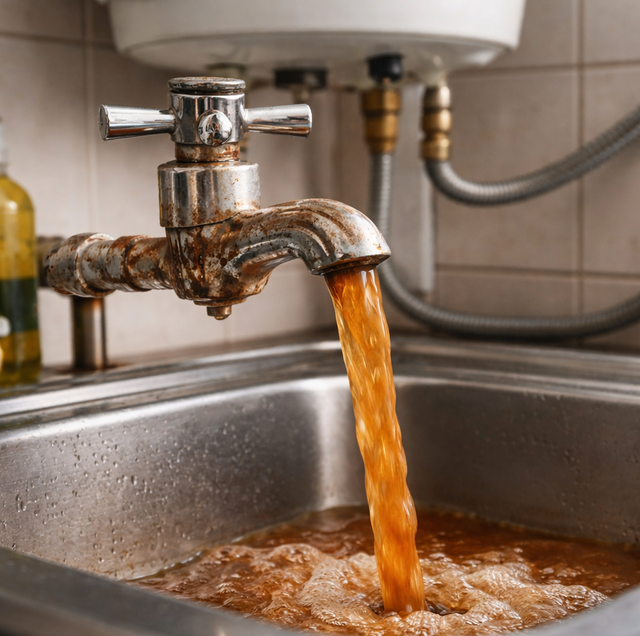
Quick Answer: Rusty or brown tap water is almost always iron: rust flaking off aging galvanized or cast-iron supply pipes, a corroding water heater, or a stirred-up city main. The pattern tells you the source. Hot-only points to the water heater. Cold or both points to your supply pipes or the service line. A sudden brown event affecting the whole house usually follows a water main flush or nearby hydrant use and clears on its own.
Few things make a homeowner reach for a bottle of water faster than turning on the tap and watching it run the color of weak tea. In an older house, that tint is rarely a mystery once you know what to look for. The brown is iron, and iron gets into your water in a handful of specific ways. The good news is that the color, and which fixtures show it, points straight at the cause. This is a diagnosis you can start on your own before anyone picks up a wrench.
What Rusty Brown Water Actually Is
The color comes from iron oxide, the same rust you see on an old nail left in the rain. Inside a plumbing system, that rust forms on the inner walls of steel or iron pipe and on the tank of a water heater. Over years, it builds into a flaky layer. When water moves through, especially after a pressure change or a period of sitting still, it lifts loose particles and carries them to your faucet. A yellow or light-tan tint is a little iron. A deep brown or reddish cast is a lot of it.
Iron in drinking water at these levels is an aesthetic and plumbing problem more than anything else, but it stains sinks, tubs, and laundry, and it tells you metal somewhere in the system is breaking down. A black or gray tint is a related but distinct signal, usually manganese rather than iron, which behaves the same way but leaves darker marks and often shows up alongside a slightly metallic smell.
The reason older homes see this so often is simple building history. Houses plumbed before the 1970s frequently used galvanized steel supply lines and cast-iron drains. Galvanized pipe has a protective zinc coating that wears away from the inside over decades, exposing the steel beneath to water and oxygen. Once that starts, rust is only a matter of time.
The Diagnostic Splits: Where Is It Coming From
Before you assume the worst, run the water and pay attention to a few patterns. Each one narrows the source.
Hot Water Only: If the brown appears only when you run hot water, and the cold runs clear, the water heater is the prime suspect. Sediment and rust collect at the bottom of the tank, and the anode rod, a sacrificial metal component that corrodes so the tank does not, may be spent. A tank that has gone years without a flush can hold a surprising layer of rust and mineral sludge. When the burner or element heats that water, it stirs the sediment and tints the hot side brown while the cold stays clean.
Cold Water, or Both Hot and Cold: When the cold water is discolored, or both hot and cold run brown, the problem sits upstream of the heater, in the supply piping itself or the service line that feeds the house from the meter. This is the classic signature of corroding galvanized or iron pipe inside an older home. The rust is forming on the pipe walls that carry water to every fixture, so the color is not tied to the heater at all.
The Whole House Suddenly, Then Clearing: A sudden brown episode that hits every tap at once, with no plumbing work on your end, usually traces to the municipal side. When the water utility flushes a main, or firefighters or crews open a nearby hydrant, the rush of water scours sediment that has settled in the city pipes and pushes it into neighborhood service lines. It looks alarming, and it is almost always temporary. This kind of event clears within a few hours once the disturbed sediment settles or gets flushed through.
One Fixture Only: If only a single faucet runs brown while the rest of the house is clear, the issue is local: a corroding supply line under that sink, a failing shutoff valve, or debris caught in that fixture's aerator. The narrow scope is the tell. A whole-house problem does not politely limit itself to one tap.
Tests You Can Run in Five Minutes
You do not need tools to gather the evidence a plumber will want.
Hot versus cold: Run the cold tap alone, then the hot tap alone, at the same fixture. Note which one carries the color. This single test separates a water-heater problem from a supply-pipe problem faster than anything else.
First draw versus flushed: Turn on a tap first thing in the morning, before anyone has used water, and watch the first few seconds. Then let it run for a minute or two. If the first draw is brown and it clears as the water runs, rust has been settling in the pipes overnight and is being flushed out, a sign of active pipe corrosion. If it stays brown no matter how long you run it, the source is feeding a steady supply of iron.
Single versus multiple fixtures: Check taps in different parts of the house, upstairs and down, kitchen and bath. Widespread color points to the main supply or service line. One lonely brown faucet points to that fixture.
Write down what you find. Which taps, hot or cold, first-draw or persistent, and how long it takes to clear. That short list turns a vague complaint into a targeted repair.
Why Persistent Rusty Water Is a Warning
A one-time brown event after a hydrant flush is nothing to lose sleep over. Rust that keeps coming back is a different message entirely. Galvanized pipe does not corrode evenly. It rusts from the inside out, and the same buildup that tints your water also narrows the pipe's interior, choking flow and dropping pressure over time. By the stage where you are seeing steady discoloration, the pipe walls are thinning, and the rust layer is thick enough to shed constantly.
Galvanized pipe ages like an artery slowly filling with plaque: the flow gets weaker, the walls get more fragile, and eventually something gives. That is why persistent rusty water in an older home is often the cue that a repipe is on the horizon. Patching one section of failing galvanized pipe frequently moves the next leak downstream, because the whole run is aging at the same rate. Replacing the corroded supply lines with modern copper or PEX solves the color, restores pressure, and removes the leak risk in one move.
The water heater side has a gentler path. A tank that is tinting only the hot water can often be drained and flushed to clear the sediment, and a fresh anode rod buys the tank years of added protection. Both jobs involve working with a pressurized tank of very hot water, so they belong with a professional rather than a weekend attempt.
What to Do Right Now, and When to Call
If you hit a sudden brown event across the whole house, start with the simple moves. Avoid running the hot side heavily during a brown episode, since that pulls the discolored water into the tank where it lingers.
Run your cold taps for several minutes to clear the line, beginning with the tap closest to where the water enters the house. Hold off on laundry until the water runs clear, because iron-laden water can set rust stains into fabric that are hard to remove.
If the color clears and stays gone, it was a passing disturbance. If it keeps returning, or you have traced it to your own pipes or heater with the tests above, it is time for a plumber to look. Persistent discoloration is not something to ride out, both because it signals corrosion and because it can stain fixtures and laundry every time it recurs.
One more step is worth taking when the cause is not obvious, or you want certainty: have the water tested by a certified laboratory. A test identifies exactly what is in the water, iron versus manganese versus something else, and at what concentration. Judging whether discolored water is safe to drink is not a call to make by eye, and a plumber diagnosing pipe corrosion is a different task from a lab assessing water quality. When in doubt, let the certified test answer the question rather than guessing.
Frequently Asked Questions
Iron at the levels that discolor tap water is generally considered an aesthetic issue rather than a toxic one, but color is not a reliable safety gauge on its own, because the same corrosion can carry other metals like lead from older fittings. The only way to know what is actually in the water is a certified laboratory test, which measures each contaminant by concentration rather than by appearance.
A sediment or iron filter can catch rust particles and clear the color at the tap, but it treats the symptom, not the failing pipe producing the rust. Filters also clog faster when they are masking an active corrosion problem, so the cartridge or media needs frequent replacement. If the source is corroding galvanized supply pipe, the durable fix is replacing that pipe, with a filter as an optional polish afterward.
Hard water itself is dissolved calcium and magnesium, which scale up white and chalky rather than brown, so it is not the direct cause of the rust color. It does accelerate the problem indirectly by building mineral scale inside pipes and water heaters, which traps sediment and gives corrosion more surface to take hold. In hard-water areas, heaters collect sediment faster, which is why the hot-only brown tint shows up sooner there.
Age is not the only factor. A water heater that never gets flushed builds a sediment layer regardless of its age, and a spent anode rod lets the steel tank corrode years earlier than it should. Softened water can actually shorten anode-rod life because the treated water is more aggressive toward the sacrificial metal, so a relatively new heater can rust if the anode was consumed quickly and never replaced.
Wait, then flush. Open a cold tap on the lowest level of the house and let it run several minutes until it clears, which lets the stirred-up sediment pass through rather than settling in your fixtures. Skip washing clothes until the water is clear, remove and rinse faucet aerators if particles collected in them, and avoid drawing hot water heavily so the discolored water does not get pulled into your heater tank.
Not quite. Brown and red tints are iron, while black or dark-gray staining usually points to manganese, a related mineral that behaves like iron but leaves darker marks on fixtures and laundry and sometimes carries a faintly metallic or earthy odor. Manganese can also feed a harmless dark biofilm inside toilet tanks and drains, so a black tint is worth flagging separately when you have the water tested.
Get to the source of your discolored water — a certified diagnosis before it stains another load of laundry. Plumbing Professionals serves Pasadena, Altadena, South Pasadena, and surrounding areas. Call (626) 247-3401.
