
No Hookup Yet? What a New Dishwasher Install Requires
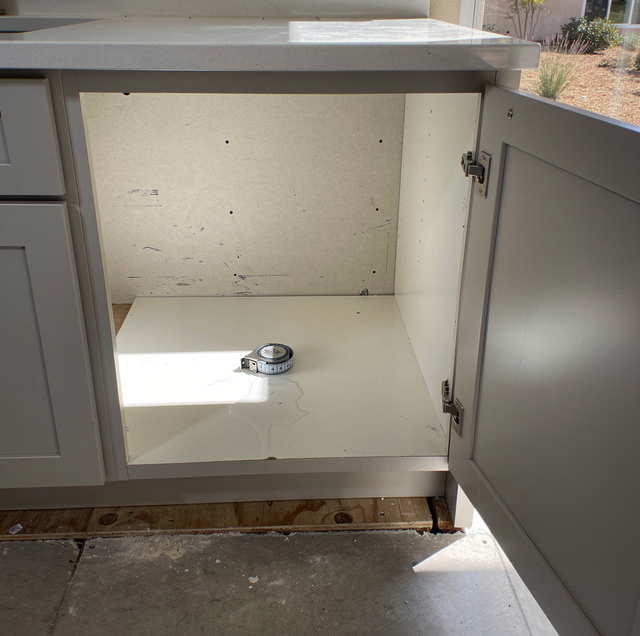
The new dishwasher is still half out of its box, cardboard peeled back, when you notice the cabinet beside your sink has nothing waiting for you. No copper stub. No shutoff valve. No drain within reach of the disposal. You run a hand along the bare drywall and the cutout in your cabinet floor, and the plumbing you assumed was already sitting there simply is not.
That gap between your counter and your crawlspace is exactly what a first-time hookup closes. Getting water and drainage to a spot that never had either is a different job from swapping one machine for another, and it changes what you should expect before your plumber ever opens the wall behind your own cabinet.
What a New Dishwasher Needs Behind the Cabinet Door
Any dishwasher, first one or fifth, needs the same three things at the cabinet: a hot water line with its own shutoff, a drain path that carries wastewater away without backing up, and a cabinet opening sized to hold the machine and its connections. That scope is simply new plumbing rough-in and fixture installation for a kitchen: supply, drain, and vent connections all built from scratch. A first dishwasher hookup is that rough-in, narrowed to one kitchen cabinet.
Where a dishwasher already sits, all three terminate at the cabinet, waiting behind the kickplate for a hose to be reattached within minutes. Where one has never sat, none of them do. A plumber working a no-hookup kitchen is not reconnecting anything; they are bringing a hot line, a drain, and a working shutoff to a spot that has never had any of them, and that difference, not the brand or size of the appliance you bought, is the real scope of the job in front of them.
What Pulls a Supply Line Off Its Simplest Path?
The simplest path is a hot line already running to the sink base, a shared wall between that cabinet and the dishwasher's spot, and enough slack in the toe-kick to fish tubing between them without opening anything. Few kitchens hand you all three at once. A dishwasher spot across the room from the sink, behind a peninsula, or on an outside wall with no nearby branch turns what would be a same-day tee-in into a longer run of new pipe, sometimes through more than one wall.
Distance is only half of it. The new line also needs a shutoff you can actually reach, since a valve buried behind the machine defeats the entire point of having one in the first place. Some sinks already carry a dual-outlet stop that can feed a second fixture with no new valve at all; most do not, and a plumber adds a dedicated one at the branch, leaving the single-faucet stop alone and untouched for whatever fixture you already have there.
A cabinet that never held a dishwasher has no power waiting either, so ask a licensed electrician to run a dedicated 120-volt circuit for it while your plumber still has that wall open.
Two Ways to Get Water to an Empty Cabinet
Once distance and shutoff access are known, the job comes down to two real paths. The first taps the hot line already feeding the sink, through a dual-outlet valve, and a short run of flexible tubing. The second runs a dedicated line back to the nearest branch or the water heater itself. Both end at the same fitting on the appliance.
Comparing a Tee-In Against a Dedicated Supply Line
Laid side by side, the two paths trade off in predictable ways. Neither is automatically better; each answers to a different cabinet layout, and a plumber who has seen your space usually knows which one applies before you open a single panel.
| Factor | Tee Into the Existing Hot Line | Run a Dedicated New Line |
|---|---|---|
| Nearest hot water | Already stubbed under the sink | Often at a wall, floor, or the water heater |
| Shutoff valve | Shares or replaces the sink's own stop | Gets a brand-new valve of its own |
| Cabinetry opened | A small hole for flexible tubing | A section of wall, floor, or cabinet back |
| Flow when both fixtures run | Splits between the sink and the dishwasher | Each fixture keeps its own full flow |
| Best fit | Dishwasher cabinet shares a wall with the sink | Dishwasher cabinet sits away from any existing line |
A tee-in wins on speed and cost of disruption: less cabinetry opens, and the existing shutoff already does most of the isolating work a new hookup needs. A dedicated line wins on capacity, since neither fixture has to share flow with the other once the dishwasher runs during a busy sink.
Neither path changes what happens after the water arrives. The drain still has to be routed, tested, and proven to carry wastewater away on its own, which is a separate question from where the supply comes from.
What the Drain Connection Has to Solve
The drain side asks more of a new hookup than most people expect. Wastewater needs a route to an existing drain, most often through the garbage disposal's own inlet or a dedicated tailpiece fitting when there is no disposal at all, and that hose has to rise before it falls so a full sink cannot push water backward into the machine. An air gap or a properly built high loop keeps that one-way path working correctly, and either one has to sit well above the sink's flood level to do its job.
Skip that rise, and the plumbing still looks finished. It runs a full cycle, drains, and shuts off exactly the way it should, right up until the sink fills for a load of dishes and gravity finds the shortest path back through the hose you left low, well before you think to check the connection again.
What Pulls Water Back Through a Careless Drain Tie-In?
A careless tie-in fails in one of two directions, and both trace back to the same missing rise in the hose. Route the drain hose straight across to the disposal at cabinet height, with no loop above the sink's flood level, and a full sink basin has a clear downhill path into your dishwasher the moment the disposal side backs up even slightly, leaving a load of dishes sitting in gray water that never came from the machine at all. Skip the connection entirely and let the hose lie loose in the cabinet, and the opposite failure shows up instead: nothing stops the pump from siphoning water back out between cycles, so the tub sits half empty at the start of every wash. Both faults stay invisible until the first real test, a sink full of dishwater during a running cycle.
A correct tie-in avoids both failures with the same piece of hardware. Whether that is a countertop air gap or a hose looped and clamped above the disposal, the point is the same: water can travel one way through that connection and never find a path back the other direction.
Have your plumber run a full wash cycle with the kickplate off before they leave, so any weep at a fitting or a slow drain shows up during their visit and not weeks later, once your cabinet is closed back up.
None of this shows on the outside of a finished cabinet, and it never will. It only shows in how the machine drains over its first few real loads, which is exactly why a plumber tests a full cycle before calling the hookup done for you.
What a Plumber Confirms Before Signing Off
Before your plumber calls the job finished, a short list gets checked at the cabinet itself. Every fitting on the new supply line gets a close look under pressure, the shutoff gets cycled to confirm it closes fully, and the drain hose gets checked for the rise that keeps the water moving one direction. None of this takes long against a fixture that was already reachable during the work, which is most of why the check happens before anyone packs up the tools and leaves your kitchen.
The same weak point draws attention throughout the kitchen: clogged sink drains, faulty garbage disposals, and loose dishwasher connections are common sources of leaks. A brand-new connection gets the same scrutiny a five-year-old one would, checked at the fitting and not assumed to be sound just because the parts came out of the box yesterday.
When the Kitchen Layout Makes the Choice for You
Every factor covered here- distance, wall access, disposal or no disposal- folds back into one question you get asked while a plumber stands in your kitchen: is there a hot line close enough to share, or does one need to be built from further away? Your own cabinet layout usually decides that before anything else about the job does, well ahead of the appliance you picked, the finish on its handle, or the day you happened to book the work.
Whatever the layout allows, the hookup itself comes down to a choice narrowed to two: share the line that already reaches the sink, or bring in one of its own from farther off. Once your plumber tells you which your kitchen supports, the drain work, the shutoff, and the testing all follow the same short path toward a machine that runs its first cycle without a single surprise waiting underneath it.
Frequently Asked Questions
Hot water, and it should never be the cold supply. A dishwasher's heating cycle runs faster and uses less energy when the incoming water is already warm, which is why a new hookup taps your kitchen's hot line, not the cold line that feeds your sink sprayer. A plumber running your fresh supply line follows that same rule.
Usually, yes. Most kitchens without a dedicated drain send the water into your disposal's inlet, which already has a built-in knockout plug for this purpose. A plumber knocks that plug free, connects your drain hose with a proper clamp, and routes it up above the drain trap before it drops back down again, which is what keeps standing sink water from siphoning backward into your dishwasher. Where there is no disposal at all, the drain ties into the sink's tailpiece instead.
An air gap is a small cylinder mounted on your countertop or sink deck that breaks the connection between the drain hose and the sink drain, preventing dirty water from traveling backward into your dishwasher. The other route is a high loop, where the hose is simply secured above your disposal instead. Which of the two your plumber fits gets confirmed in your kitchen first.
There's no fixed limit written into the pipe itself, but distance still changes the job. A run of a few feet inside your own cabinet base is a simple tee and a length of flexible tubing. Once the line has to cross into another cabinet or run from a wall on the far side of your kitchen, your plumber is running new pipe rather than simply extending an existing branch.
Sometimes, and it really depends on where the nearest existing water and drain lines already run. If your dishwasher cabinet sits right next to the sink base, a plumber can usually route both lines through the shared wall without opening anything you will ever see. If your cabinet sits across the kitchen, reaching it may mean opening a section of floor or a wall, and your plumber will confirm which before the work starts.
It takes longer, and the difference is where your plumber spends their time. Swapping an old dishwasher for a new one usually means disconnecting three fittings that are already in place and reconnecting three more in the same spots, often in under an hour. A first-time hookup asks your plumber to find the nearest water line, run a new supply to your cabinet, open a path for the drain, and confirm your cabinet can even hold the machine you bought. None of that is difficult work on its own, but it is several separate tasks stacked together instead of one, which is why your plumber will usually ask about your layout before scoping your job.
A dishwasher with nowhere to plug in yet is a plumbing job, not a returns problem — our team runs the supply line, ties in the drain, installs the shutoff valve, and tests the connection before your new machine ever runs its first cycle. Plumbing Professionals serves Pasadena, Altadena, South Pasadena, and surrounding areas. Call (626) 247-3401.
