
Copper vs. PEX Repipe: Which Actually Lasts Longer?
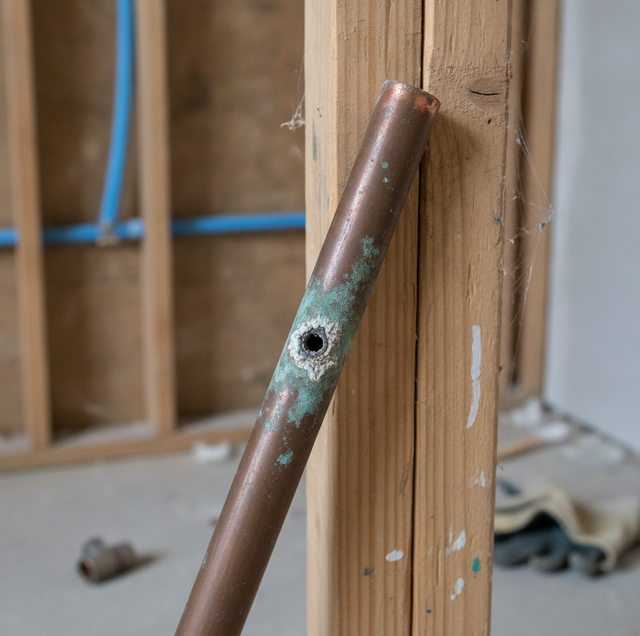
When the same wall keeps getting opened up for another leak, or the water pressure has faded to a trickle, a whole-house repipe stops being optional. The next question is the one that stalls most homeowners: copper or PEX? Both are the standard choices, both are sold as lasting decades, and both have real weaknesses that only show up years later. The right answer is not universal. It depends on what your water is doing to the pipe, where the pipe has to run, and how the two materials fail when they finally do.
Here is a useful way to think about it before any recommendation: a pipe does not wear out on a clock. It wears out from what flows through it and what surrounds it. So the honest comparison is less "which lasts longer" and more "which one survives your specific conditions longer." Get the mechanism straight, and the decision usually makes itself.
Quick Answer: Both copper and PEX can last decades. Copper is cited at 50+ years, and PEX at 40 to 50, but those are manufacturer and industry estimates, not guarantees. The deciding factor is rarely the label lifespan. It is your water chemistry, freeze risk, and where the pipe has to run. Aggressive, acidic, or high-velocity water pits copper from the inside; PEX shrugs that off. Copper wins where pipe sees direct sun or extreme heat, since UV degrades PEX. For most enclosed residential repipes, either does the job for the life of the house when installed correctly.
How Each Material Actually Fails
Copper is a rigid metal that has been in homes for the better part of a century, so its long-term behavior is well known. It handles high temperatures without softening, holds up under high water pressure, does not off-gas anything into the water, shrugs off sunlight, and is fully recyclable at the end of life. Its failure mode is corrosion from the inside. Water that is acidic (low pH), unusually soft, or moving at high velocity can etch tiny craters into the copper wall until a pinhole opens. These pinhole leaks are the classic copper problem, and pitting quietly accumulates over the years before the first drip appears. Copper also bursts if water inside it freezes and expands, and because it is joined with soldered fittings, the quality of the installation rides on the plumber's skill with a torch. One more wrinkle in older homes: systems soldered before 1986 may have used lead solder, which is a health reason on its own to replace aging copper.
PEX, short for cross-linked polyethylene, is flexible plastic tubing. Its biggest structural advantage is that it runs in long continuous lengths, so a repipe uses far fewer joints, and every joint you eliminate is a leak point you never have to worry about. It does not corrode, and it does not scale up the way metal can, which matters a lot in hard-water areas where scale is a constant companion. It tolerates freezing better than copper because the tubing can expand with ice rather than split during the first hard freeze. It installs faster and with less demolition since it can be fished through existing wall cavities like electrical wire. It is also quieter, because the flexibility absorbs pressure surges that make rigid copper bang (the water hammer you hear when a faucet shuts fast). PEX has its own limits. Direct sunlight is its enemy; UV breaks down the polymer, so it cannot be used outdoors or in any run exposed to daylight unless it is sleeved or shielded. It cannot take the extreme heat that copper can. And some early PEX fittings had reliability problems, though modern expansion and crimp fittings have largely put that history to rest.
Think of it like footwear for a long hike. Copper is the leather boot: tough, proven, handles heat and abuse, but it will crack if you flex it hard in the cold, and it demands a skilled hand to fit right. PEX is the modern trail runner: flexible, forgiving underfoot, quick to lace up, but you would not wear it across a bed of hot coals or leave it baking in the sun for years.
Copper vs PEX at a Glance
| Factor | Copper | PEX |
|---|---|---|
| Cited lifespan (estimate) | ~50+ years | ~40-50 years |
| Corrosion resistance | Vulnerable to pitting in acidic, soft, or fast-moving water | Immune to that internal corrosion; resists scale |
| Freeze behavior | Can split when water freezes | Expands with ice; often survives a freeze that splits copper |
| Heat tolerance | Handles very high temperatures | Good for normal hot water; not for extreme heat |
| Install | Soldered joints, skilled labor, and more demolition | Fished through walls, fewer joints, less invasive |
| UV/sunlight | Fine in the sun and outdoors | Degrades in direct sunlight; must be enclosed or shielded |
The lifespan numbers are the least useful column in that table, which is exactly why homeowners over-weight them. A copper system in aggressive water can pit through in a fraction of its "50 years," while a properly installed PEX system in a normal enclosed environment tends to reach its estimate without drama. Read the failure modes, not the headline number.
What Should Actually Decide It
Water chemistry comes first. If your water is acidic or very soft, or your street pressure is high enough to keep velocity up, copper is fighting an uphill battle from day one, and PEX sidesteps the whole problem. A water test tells you more about which pipe will last than any spec sheet. Second, look at where the pipe has to go. Any run that sees direct sun, sits in an exposed outdoor location, or crosses an area with real freeze exposure changes the math: copper for the sun-exposed run, and PEX's freeze tolerance is a point in its favor for cold, unconditioned spaces as long as it stays out of the light.
Third is how invasive you can afford the job to be. If opening walls throughout a finished home is a serious disruption, PEX's ability to snake through existing cavities is a genuine advantage. Fourth is preference and how the pipe behaves day-to-day, including PEX's quieter operation and copper's long track record. None of these is a tiebreaker on its own. Stacked together, they point clearly for most homes. And one thing that is not negotiable, regardless of material: a repipe means cutting into pressurized supply lines throughout the house, so it is a licensed professional job, not a weekend project. The wrong joint or an unsupported run can turn into a flood inside a wall.
Frequently Asked Questions
PEX, and it helps to name copper's actual failure here: pitting corrosion, a localized pinhole that punches straight through the wall while the rest of the pipe still looks fine. Higher water velocity or turbulence at fittings speeds up a mechanism called erosion-corrosion. Copper wall thickness buys time against it, so a thicker-walled Type L pipe resists longer than a thinner-walled Type M pipe, but neither is immune. PEX is a polymer and sidesteps the mechanism entirely, which is why an acidic or aggressive water test often settles the choice.
It does, within limits. When water freezes it expands with enough force to split rigid copper, especially at a soldered joint. PEX tubing can stretch and flex with the ice, so it frequently survives a freeze event that would have burst a copper line in the same wall. Even so, neither material is truly freeze-proof: if a section freezes solid and completely blocks flow, pressure can build against the ice plug and rupture even PEX. The freeze advantage buys you resilience, not immunity, so unconditioned runs still need insulation.
Not in direct sunlight. Ultraviolet light breaks down the cross-linked polyethylene over time, making it brittle, so any run exposed to daylight, an outdoor hose bib line, or piping under a skylight, favors copper or must be sleeved in UV-rated conduit or shielded from the sun. An enclosed attic that stays dark is generally fine for PEX, though attics that swing to extreme summer heat are a spot where copper's higher temperature tolerance can matter for hot lines.
The fitting matters as much as the pipe itself. Some early-generation brass PEX fittings suffered from dezincification, a corrosion process that leaches zinc from the brass and weakens it, and a few of those lines were recalled. Modern connections have largely resolved this: expansion fittings made to the ASTM F1960 spec and stainless-steel crimp rings are the reliable current standard. When comparing quotes, it is fair to ask which fitting system a plumber uses, because a top-grade pipe joined with a poor fitting is only as good as the weak link.
PEX, because of its flexibility. Water hammer is the banging you hear when a valve or faucet shuts quickly, and the moving water slams to a stop against rigid pipe. Copper transmits that shock and the noise straight through the walls. PEX tubing flexes slightly and absorbs part of the pressure surge, so it runs noticeably quieter. If a banging-pipes complaint is part of why you are repiping in the first place, that is a real mark in PEX's column.
Copper still carries a premium reputation among some buyers, who associate it with quality, and that perception holds even when the practical difference is small. But PEX has been standard in new construction for years and is widely accepted by inspectors and buyers alike, so it does not drag down value the way it might have when it was new to the market. What actually moves the needle at resale is a permitted, professionally done repipe in either material, which replaces failing galvanized or aging original pipe with something a buyer does not have to worry about.
Get a straight recommendation on the right repipe material for your home — matched to your water and your walls, not a one-size pitch. Plumbing Professionals serves Pasadena, Altadena, South Pasadena, and the surrounding areas. Call (626) 247-3401.
