
How Long Does a Cast Iron Sewer Line Last? What Homeowners Miss
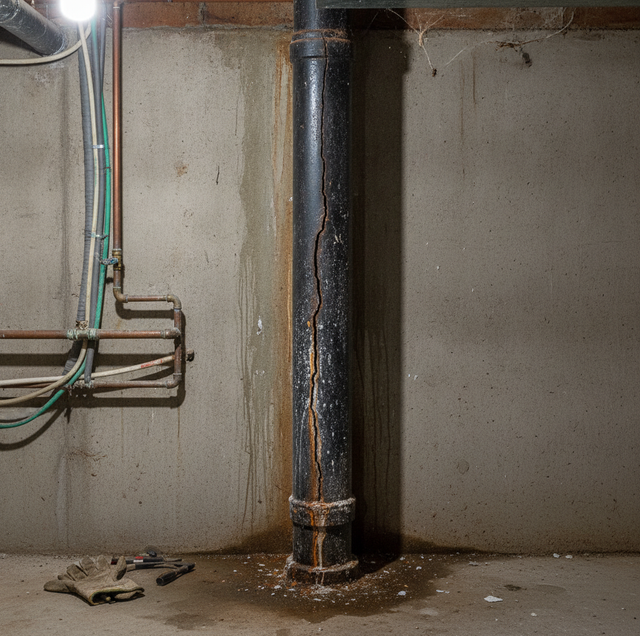
If your home was built before the 1970s, the pipe carrying waste out to the main is almost certainly cast iron. It was the standard material for decades, and much of it is still doing its job. The question owners of older houses eventually ask is a fair one: how much longer can it last, and how do you know when it has reached the end?
The honest answer is that age tells you when to start paying attention, not when the pipe will fail. A cast iron sewer line does not run on a timer. Two houses built in the same year on the same street can have lines with completely different shapes depending on soil, water chemistry, and how hard the drains have been used over the years.
Quick Answer: Cast iron sewer and drain pipe is often cited as lasting around 50 to 75 years or more, but the real number depends on conditions in your yard and how the line has been used. Cast iron corrodes from the inside out, so a pipe can look fine above ground while the bottom has rusted thin. Once a home reaches the cast iron age, the reliable way to know its condition is a camera inspection, not a guess based on the year it was built.
Why Cast Iron Was Everywhere, and Why It Eventually Wears Out
Cast iron earned its place. It is heavy, quiet under load, and holds up to the weight of soil and traffic above it. Builders used it for sewer laterals and interior drain, waste, and vent stacks for the better part of a century because it did the job and lasted a long time.
The weakness is corrosion. Cast iron reacts with moisture and with the acids and detergents that pass through a household drain, and over decades, that chemistry eats into the metal. The process is slow, and it is invisible from the surface, which is exactly why it catches homeowners off guard. Nothing about the outside of a buried line tells you what the inside looks like.
How a Cast Iron Line Actually Fails
Here is the part most people get wrong. They picture the pipe rusting evenly, like a nail left out in the rain, thinning all the way around until it gives out. That is not how it goes.
A cast iron sewer line fails from the inside, and it fails at the bottom first. Waste and moisture do not coat the pipe evenly; they sit and flow along the pipe's floor, so corrosion and scaling concentrate there. The bottom rusts, roughens, and scales up while the top, called the crown, can still look nearly new.
Think of it like a dirt road that starts smooth. Traffic and runoff carve ruts into the low spots while the shoulders stay firm. In a sewer line, that rutting is called channeling: the pipe's smooth floor erodes into a rough, pitted trough. Debris that would have washed straight through a clean pipe now snags on the roughness, so clogs form more often and drains slow down. The pipe loses carrying capacity long before it collapses.
Left alone, the channeling deepens until the bottom of the pipe is worn through entirely. At that point, you can have a section where the crown is intact, but the floor is simply gone, allowing waste and soil to mix. Cracks spread from there, joints separate, and eventually a run of pipe can sag or collapse.
The Signs Your Line Is Reaching the End
A failing cast iron line rarely goes from fine to broken overnight. It sends signals for months or years first. Watch for these:
- Drains that are slow or back up again and again: One slow drain can be a local clog. Several fixtures slowing down, or the same line backing up after every cleaning, point to a problem in the main line itself.
- A persistent sewer smell inside or around the house, especially near floor drains or in the yard.
- Sewage backing up into tubs, floor drains, or the lowest fixtures. This is the clearest warning and a health hazard.
- Visible cracks on any exposed cast iron in a basement or crawlspace, often with rust staining below them.
- A sagging or bellied section, where the pipe has dropped and now holds standing water and waste instead of draining cleanly. Bellies collect debris and clog repeatedly.
- Tree roots working in at cracked joints, which show up as recurring root balls when a line is cleared.
- A patch of unusually lush, green lawn over the line's path, fed by waste leaking into the soil.
- New cracks in a slab or foundation, or damp spots, where a failed line under the house has been leaking.
Any one of these in a home of the cast iron age is a reason to look inside the pipe rather than keep clearing the same clog.
How the Line Gets Diagnosed
You do not have to dig to find out what shape a line is in. A sewer camera inspection settles it. A plumber feeds a waterproof camera on a flexible cable through a cleanout and down the line, watching a live picture of the interior the whole way.
The camera shows what matters: how much channeling has eaten into the floor, where cracks and separated joints are, and whether any section has bellied or sagged. It also shows where roots have entered and how far the corrosion has progressed. This is the difference between guessing from the home's age and actually knowing. Age raises the question; the camera answers it.
What Can Be Done About a Failing Line
The right fix depends on how much of the line is affected and the shape of the host pipe. Options generally fall into a few categories:
- Spot repair: If the trouble is confined to one short section, that piece can be dug up and replaced or repaired without touching the rest of the line.
- Trenchless rehabilitation: When the existing pipe still holds its round shape, it can often be renewed without a full trench. A cured-in-place liner is pulled or inverted into the old pipe and hardened into a new pipe within the old one. Pipe bursting pulls a new pipe through the path of the old one while breaking the old pipe outward. Both spare much of the yard and hardscape.
- Traditional replacement: When a line has collapsed, sagged badly, or corroded past the point where a liner has anything sound to bond to, the section is excavated and replaced with new pipe.
A camera inspection, sometimes paired with locating equipment that marks the line's depth and path, is what tells a plumber which of these a given line actually needs. There is no single answer that fits every house.
A Note on Safety
Sewage is a biohazard, not just a mess. A backup carries bacteria and other pathogens, and standing sewage should not be handled without proper protection. Sewer line diagnosis and repair is also a job for a licensed plumber. The work involves confined spaces, heavy pipe, excavation near other utilities, and code requirements for how a new line ties in. Running a camera, reading what it shows, and choosing the right repair all take training and the right equipment. This is not a place to improvise.
If you own an older home, the practical takeaway is simple. Do not wait for a collapse to find out what your line is doing. Once a house reaches the age where cast iron was standard, an inspection turns an unknown into a known, and a known problem is almost always cheaper and less disruptive to handle on your schedule than an emergency one on the pipe.
Frequently Asked Questions
Run a sewer camera through the line. The camera travels through the interior on a flexible cable and shows exactly where channeling, cracks, and bellies have formed, so you are reading the actual condition of the pipe rather than estimating based on the year the house was built. Two lines of identical age can be in very different shapes, and only the picture from inside tells you which one you have.
Channeling is the rough trough that forms along the bottom of the pipe as it rusts and erodes, while the top of the pipe still looks intact. Waste catches on that roughened floor instead of flowing straight through, so the line clogs more easily and loses carrying capacity well before it fully collapses. It is a common finding on camera in older lines and one of the earliest structural signs that the pipe is on its way out.
Waste and moisture sit and flow along the bottom of the pipe rather than coating it evenly, so corrosion and scaling concentrate on the invert, the floor of the pipe. That is why a camera can show a crown that still looks solid over an invert that has worn through. The uneven wear is why a line can be badly compromised at the bottom while appearing sound wherever you can actually see it.
Often, yes. When the old pipe still holds its round shape, a cured-in-place liner or pipe bursting can rehabilitate the run without a full trench across the yard. The limit is structural: a section that has collapsed or bellied badly no longer gives a liner sound pipe to bond to, so those stretches usually still need excavation. A camera inspection is what decides which parts of a line qualify for trenchless work.
Both. Roots seek out the small cracks and separated joints in an aging line, and as they grow, they widen that opening and let in more soil and debris. So a root intrusion is a clog and a signal at the same time: the fact that roots got in at all means the pipe wall or joint had already been breached. Clearing the roots relieves the clog but does not repair the opening that lets them in.
Yes. A pre-purchase sewer camera inspection on a house of cast iron age reveals hidden channeling, cracks, or a belly that a standard home inspection does not check for and will not catch. Sewer line work is one of the larger repairs a house can need, so knowing the line's condition before you buy is far cheaper than discovering it after closing, and it can factor into what you are willing to pay.
Schedule a sewer camera inspection — know your line's real condition before it fails. Plumbing Professionals serves Pasadena, Altadena, South Pasadena, and surrounding areas. Call (626) 247-3401.
