
CIPP Sewer Line Pipelining In Pasadena, CA, and Surrounding Areas: Restoring Pipes From The Inside Out
You are already stressed about the slow drains and that one bathroom that keeps threatening to overflow, and now someone tells you they can repair your sewer line in Pasadena, CA, from the inside. No trench across the lawn, no ripping out the driveway, no tearing through the landscaping. It sounds almost suspicious when you are bracing yourself for weeks of mess and a yard that looks like a construction site.
That is where CIPP sewer line pipelining comes in. Sewer line pipelining, also known as CIPP technology, gives homeowners in Pasadena, CA, a way to restore aging or damaged pipes without digging a long trench across the property.
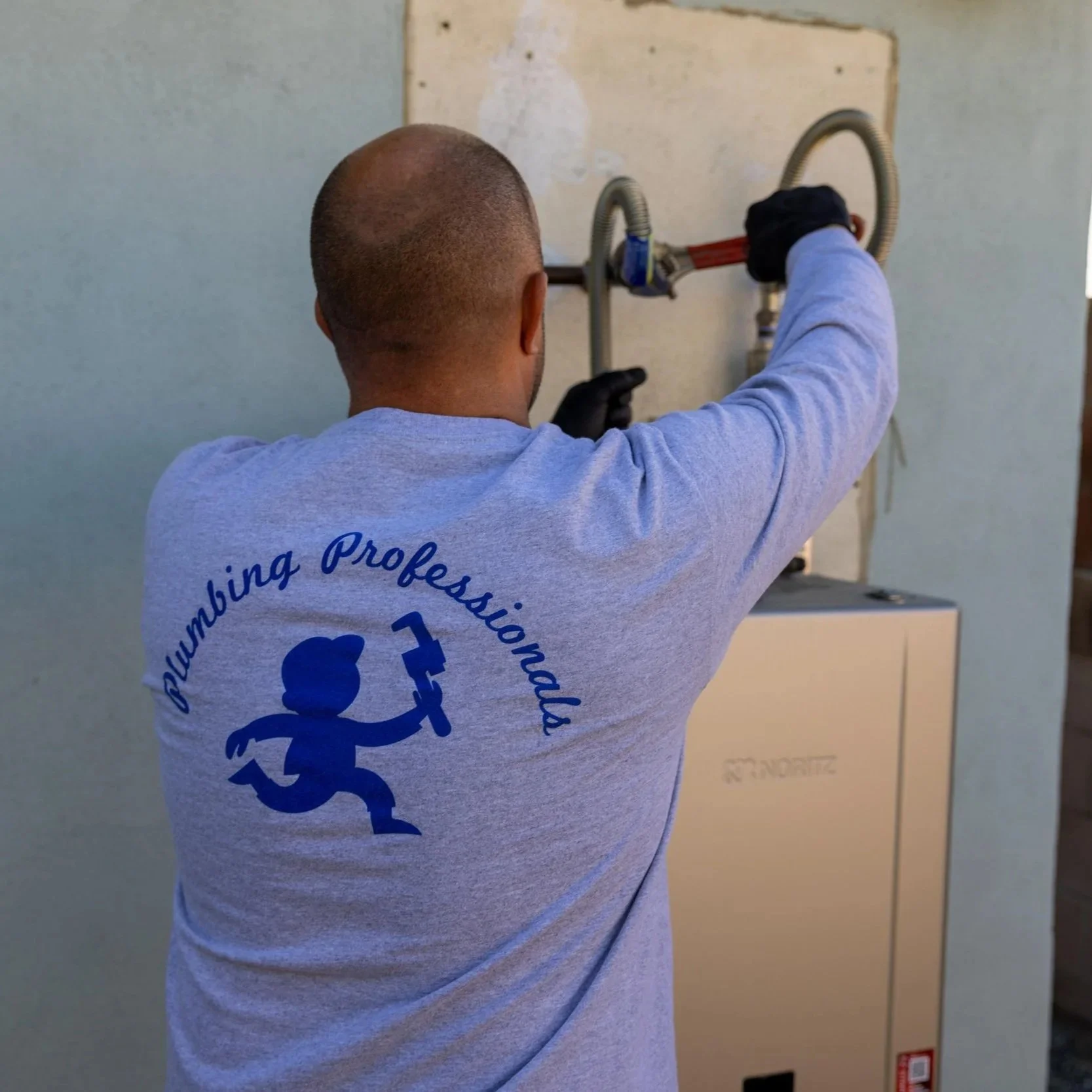
Plumber working on sewer repair equipment during CIPP sewer line pipelining process, restoring underground pipes without excavation in Pasadena, CA, and surrounding areas property.
Why Sewer Lines In Pasadena, CA, and Surrounding Areas Often Need Structural Repair
Pasadena, CA, and surrounding areas has no shortage of mature neighborhoods with character. Many of those homes were built decades ago with clay or cast-iron sewer lines. Clay pipes depend heavily on tightly sealed joints. Over time, soil shifts, roots press against the exterior, and joints separate. Even a small gap is enough for roots to find moisture and work their way inside.
Cast iron lines fail differently. Years of wastewater exposure lead to internal corrosion. The interior surface becomes rough, flakes break away, and debris starts catching more easily. Homeowners often notice the warning signs gradually. The kitchen sink drains more slowly. The shower gurgles when the washing machine runs. The toilet occasionally bubbles after a flush.
A lot of people in Pasadena, CA, and surrounding areas search online with phrases like, “Why do my drains keep backing up even after cleaning?” The answer is often structural damage. Repeated snaking clears blockages, but it does not fix cracks, joint separation, or corrosion. Sewer line pipelining (CIPP technology) addresses that deeper issue by reinforcing the pipe from within.
What Sewer Line Pipelining (CIPP Technology) Actually Is
CIPP stands for cured-in-place pipe. It is a trenchless method used to repair existing sewer lines without removing the entire pipe. Instead of digging up and replacing the line, plumbers install a resin-saturated liner inside the damaged pipe.
Once inserted, the liner is inflated to press tightly against the pipe walls. The resin then cures and hardens, forming a new pipe within the old one. That inner pipe is smooth, continuous, and resistant to root intrusion and corrosion.
Sewer line pipelining (CIPP technology) does not rely on patching one crack at a time. It creates a structural liner along the affected section. For many homeowners in Pasadena, CA, and surrounding areas that means addressing multiple problem areas at once without tearing through the yard.
How The CIPP Process Works In Real Homes
Homeowners often ask, “What actually happens during sewer line pipelining?” The process begins with a camera inspection. A small camera travels through the sewer line to identify cracks, root intrusion, or separated joints. Without that inspection, no one can determine whether CIPP technology is appropriate.
After inspection, the line is cleaned thoroughly. High-pressure water jetting removes buildup, scale, and roots. Preparation is critical. If debris remains, the liner may not bond evenly to the interior surface. Once the pipe is clean, the resin-coated liner is inserted through an access point, often from a cleanout.
The liner is then positioned carefully and inflated. As the resin cures, it hardens into a durable inner pipe. After curing, a final camera inspection confirms alignment and smooth flow. Sewer line pipelining (CIPP technology) restores structural integrity while minimizing surface disruption.
When CIPP Is Recommended In Pasadena, CA, and Surrounding Areas
CIPP sewer line pipelining works best when the existing pipe maintains its general shape. If the line has cracks, moderate root intrusion, or joint separation but has not completely collapsed, CIPP technology can be a strong option.
In Pasadena, CA, and surrounding areas many sewer lines run beneath landscaped yards, patios, or driveways. Digging through those areas can significantly increase restoration costs and create weeks of inconvenience. Sewer line pipelining allows reinforcement of the pipe without continuous excavation.
However, if a pipe has collapsed in multiple sections or has severe misalignment, traditional replacement or pipe bursting may be more appropriate. CIPP technology depends on having a stable host pipe. An honest evaluation determines whether pipelining provides a long-term solution or whether a different method makes more sense.
Common Misunderstandings About CIPP Technology
One common homeowner mistake is assuming sewer line pipelining is just a temporary sleeve. In reality, when installed properly, the cured liner is designed to last for decades. Modern materials resist corrosion and root intrusion better than many older clay or cast iron pipes.
Another misconception is that if water still drains, the pipe must be fine. Slow drainage, frequent clogs, and occasional backups are often early warning signs of structural damage. Ignoring those signs can lead to interior water damage and expensive cleanup.
Some homeowners also believe trenchless methods are always cheaper. While sewer line pipelining can reduce landscaping and hardscape restoration costs, the total expense depends on pipe length, depth, and complexity. The value comes from combining structural repair with reduced property disruption.
Property Protection And Reduced Surface Impact
One of the biggest fears homeowners in Pasadena, CA, and surrounding areas have is yard destruction. Established landscaping, decorative pathways, and mature trees represent years of effort and investment. The thought of a long trench cutting across the property adds to the stress of an already frustrating plumbing issue.
Sewer line pipelining (CIPP technology) typically requires only small access points. Instead of excavating the entire line, work is performed from within the pipe. That means fewer disturbed areas and less soil displacement.
Reducing excavation lowers the risk of future settling and protects irrigation systems. Hardscaping, such as driveways and patios, often remains intact. While some minimal digging may be required, the difference between a few access pits and a full-length trench is significant for both cost and peace of mind.
Long-Term Performance And Maintenance Expectations
Homeowners often ask, “Will I have to deal with this again in a few years?” Sewer line pipelining creates a smooth interior surface, improving flow. Fewer joints mean fewer entry points for roots. That can reduce the annual root-cutting cycle common in older clay systems.
CIPP technology is designed to provide structural support for decades when installed under appropriate conditions. That does not mean the system is completely maintenance-free. Responsible water use and occasional inspections still matter, especially in older homes.
At Plumbing Professionals, we have seen how repeated spot repairs can create ongoing frustration. Sewer line pipelining offers a structural solution that addresses multiple cracks and weak joints at once. For many homes in Pasadena, CA, and surrounding areas it bridges the gap between constant cleaning and full excavation replacement.
When Replacement Might Be The Better Option
It is important to recognize that CIPP sewer line pipelining is not the answer for every situation. If a sewer line has extensive collapse, severe sagging, or major alignment problems, pipelining may not correct those structural issues.
Some homeowners push for trenchless options simply to avoid digging. Choosing CIPP technology for a pipe with structural integrity issues can lead to future complications. A thorough inspection determines whether the host pipe is suitable for a liner.
Making the right decision protects your investment. The goal is not just avoiding excavation. The goal is to restore reliable sewer function for the long term.
