
Why Annual Water Heater Flushing Extends System Life
If your shower keeps going lukewarm halfway through and your water heater sounds like it is popping or rumbling in the garage, you are not imagining things. That noise and fading heat usually means sediment has taken over the bottom of your tank, and ignoring it leads to higher energy bills and a shorter system life.
Most homeowners never think about water heater maintenance and flushing until they are dealing with cold water, rusty discoloration, or a leaking tank. By the time those symptoms show up, the damage inside has often been building for years.
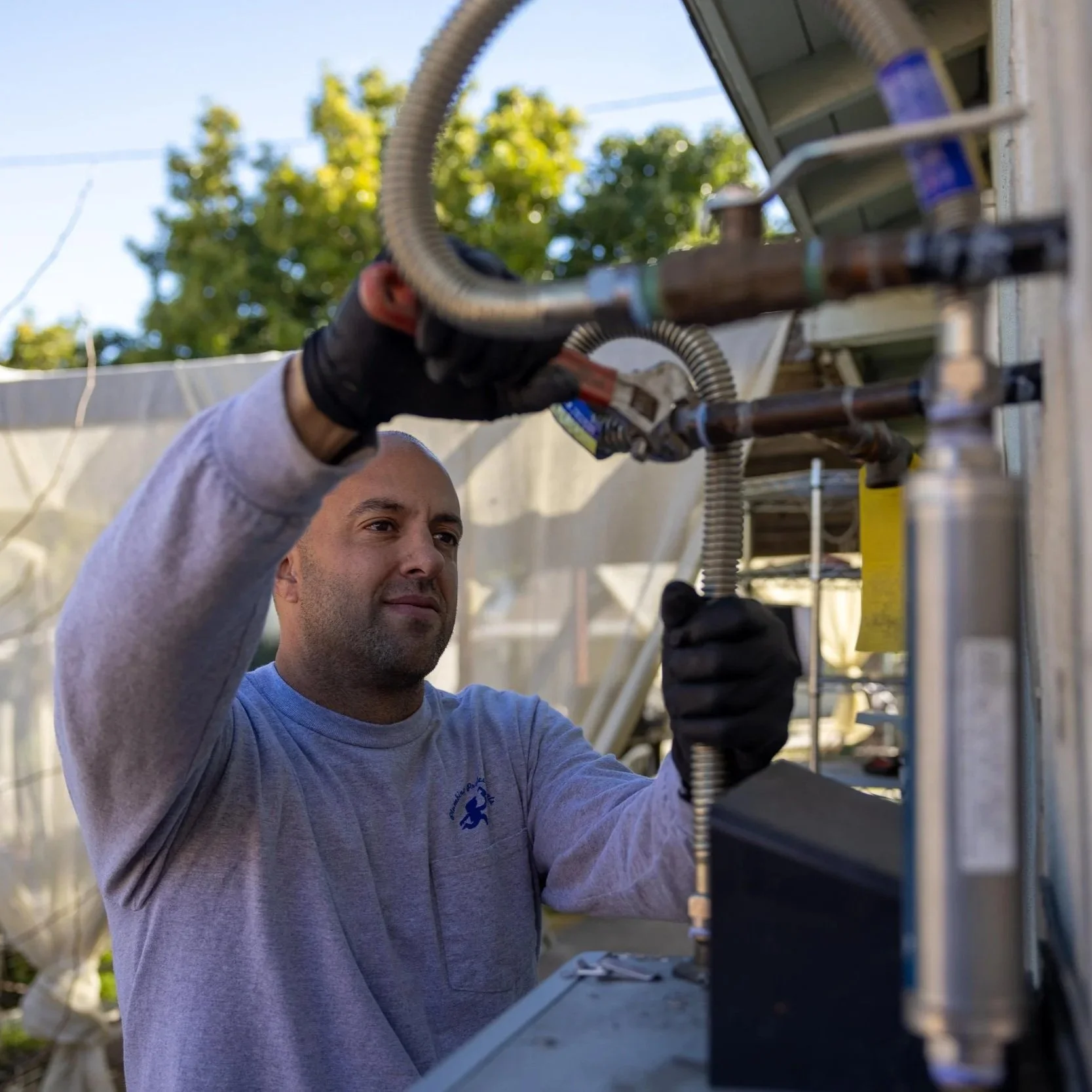
Plumber performing water heater maintenance and flushing service, inspecting connections to improve efficiency, remove sediment buildup, and extend system lifespan.
What Is Actually Happening Inside Your Tank
Water heaters look simple from the outside, but inside the tank, a lot is going on. Cold water enters, gets heated by a burner or electric element, and rises to the top for distribution through your plumbing system. Over time, minerals in your water supply settle to the bottom of the tank. That layer of sediment becomes thicker year after year if it is not removed.
Water heater maintenance and flushing address that buildup directly. Sediment acts like insulation between the heat source and the water. The burner or element must run longer to achieve the same temperature. That extra runtime increases component wear and raises energy consumption. Many homeowners misunderstand the rumbling or popping sound they hear. Those noises often come from water trapped beneath sediment layers, boiling and forcing its way through hardened mineral deposits.
Ignoring sediment does not just affect efficiency; it also affects the environment. It also impacts structural integrity. Excess heat concentrated at the bottom of the tank can weaken the metal over time. Small stress points develop and eventually lead to leaks. Annual flushing helps reduce that stress and extends the system's useful life.
Why Skipping Maintenance Feels Harmless Until It Is Not
One of the most common homeowner beliefs is that if hot water is still coming out of the faucet, everything must be fine. That assumption leads many people to skip water heater maintenance and flushing year after year. The problem is that sediment buildup progresses quietly. Performance slowly declines, and homeowners adjust their routines without realizing the cause.
You might shorten showers, stagger laundry loads, or turn the thermostat up a little higher to compensate. Those small adjustments hide the underlying issue. Meanwhile, the heater works harder, components age faster, and energy bills climb. By the time the water temperature becomes unreliable or the tank starts leaking, internal damage has often progressed to the point where repair is no longer practical.
Water heater maintenance and flushing serve as preventive care. Just as you would not ignore oil changes for your car, neglecting annual tank flushing can lead to premature failure. Regular maintenance allows a technician to inspect valves, check for corrosion, and address minor issues before they escalate into expensive emergencies.
How Sediment Impacts Efficiency And Recovery Time
Homeowners often wonder why their water heater runs out of hot water so fast. Sediment is frequently the answer. When mineral deposits occupy space at the bottom of the tank, effective capacity shrinks. A 50-gallon tank might deliver only 40 gallons of usable hot water. That reduction becomes noticeable during back-to-back showers or when multiple fixtures run at once.
Water heater maintenance and flushing restores lost capacity by clearing out those deposits. Once sediment is removed, heat transfers more efficiently from the burner or element to the water. Recovery time improves, meaning the tank reheats faster after heavy use. That improvement directly affects daily convenience and reduces frustration in busy households.
Water heater maintenance and flushing serve as preventive care. Just as you would not ignore oil changes for your car, neglecting annual tank flushing can lead to premature failure. Regular maintenance allows a plumber to inspect valves, check for corrosion, and address minor issues before they escalate into expensive emergencies.
The Common Mistake Of Thinking New Means Maintenance Free
Another frequent misconception is that a newer water heater does not need maintenance. Homeowners sometimes assume that because a unit is only a few years old, water heater maintenance and flushing can wait. That thinking allows sediment to start accumulating early, especially in areas with hard water.
Manufacturers often recommend annual flushing precisely because mineral buildup begins from the first day of operation. Waiting five or six years before performing the first flush can result in hardened deposits that are more difficult to remove. Early maintenance helps keep the tank interior cleaner and reduces stress on heating components.
Water quality plays a major role. Hard water accelerates mineral accumulation. Even homes with water softeners can experience some level of sediment. Annual flushing helps manage that buildup before it compromises performance. Treating a new heater as maintenance-free may shorten its lifespan rather than protect it.
What Happens During A Professional Flush
Homeowners often ask what happens during water heater maintenance and flushing. The process involves shutting off the heater, connecting a hose to the drain valve, and allowing water to drain from the tank. As fresh water enters and circulates, sediment is carried out through the hose. The technician may also inspect the anode rod, which helps protect the tank from corrosion.
Many people underestimate the importance of the anode rod. That component sacrifices itself to prevent the steel tank from rusting. During annual maintenance, checking its condition provides insight into the system's health. Replacing a depleted anode rod can significantly extend tank life. Skipping maintenance means missing that opportunity.
A professional flush also includes checking for leaks, testing the temperature and pressure relief valve, and verifying proper thermostat settings. Water heater maintenance and flushing are not just about draining water. It is an opportunity to evaluate overall system health and make adjustments to improve safety and efficiency.
How Often Should You Flush A Water Heater?
"How often should you flush a water heater?" is a common search phrase. In most cases, annual flushing is recommended. Homes with particularly hard water may benefit from more frequent service. Waiting several years between flushes increases the likelihood of heavy sediment accumulation and reduced efficiency.
Annual water heater maintenance and flushing create a consistent routine. Regular service prevents sediment from reaching levels that cause rumbling, overheating, or internal damage. Homeowners who stick to a yearly schedule typically experience fewer breakdowns and longer equipment life.
Establishing a maintenance habit also makes it easier to track performance changes. If the hot water supply begins to decline or unusual noises appear, those changes can be addressed promptly. Ignoring maintenance for extended periods removes that early warning system and increases the chance of sudden failure.
Comparing Preventive Maintenance To Emergency Replacement
Some homeowners view water heater maintenance and flushing as an optional expense. It may seem easier to skip it and deal with replacement when the time comes. However, emergency replacement often costs more in terms of stress, scheduling, and potential property damage.
A leaking tank can damage flooring, drywall, and nearby belongings. Cleanup and repairs add to the overall expense. Emergency service may also limit your options for choosing a replacement model. Preventive maintenance spreads costs over time and reduces the likelihood of high-stress scenarios.
At Plumbing Professionals, we often see the difference between maintained and neglected units. Systems that receive regular flushing tend to operate more quietly, heat more consistently, and last longer. Neglected tanks often exhibit severe corrosion, thick sediment layers, and a shortened lifespan.
The Long-Term Value Of Consistent Care
Water heater maintenance and flushing may not feel urgent, but its impact adds up over the years. Removing sediment reduces strain on burners and elements. Monitoring components helps identify minor issues before they escalate. Maintaining efficiency lowers monthly operating costs and supports stable performance.
Homeowners often focus on visible upgrades, such as new appliances or remodeled kitchens. Hidden systems such as water heaters quietly support daily comfort. Reliable hot water makes showers, laundry, and dishwashing seamless. When performance declines, frustration sets in quickly. Annual maintenance protects that convenience.
Longevity matters as well. Replacing a water heater several years earlier than necessary due to neglect increases overall home ownership costs. Water heater maintenance and flushing support the goal of getting the full expected lifespan from the equipment. A modest annual investment can delay a major expense and reduce unexpected disruptions.
