
What To Do Immediately After A Pipe Bursts In Your Home
Water is spraying from the wall, the ceiling is dripping onto the living room floor, and you are standing there in socks, wondering how bad the damage will be. In that moment, panic sets in fast, and every second feels expensive.
A pipe burst is one of the most stressful plumbing emergencies a homeowner can experience. The primary problem is obvious. Water is escaping where it shouldn't. The secondary damage begins almost immediately. Drywall absorbs moisture. Flooring starts to swell. Electrical components may be exposed to water. In those first few minutes, knowing exactly what to do can significantly reduce the scope of the damage. Emergency pipe burst repair always begins with quick, clear steps before a plumber even arrives.
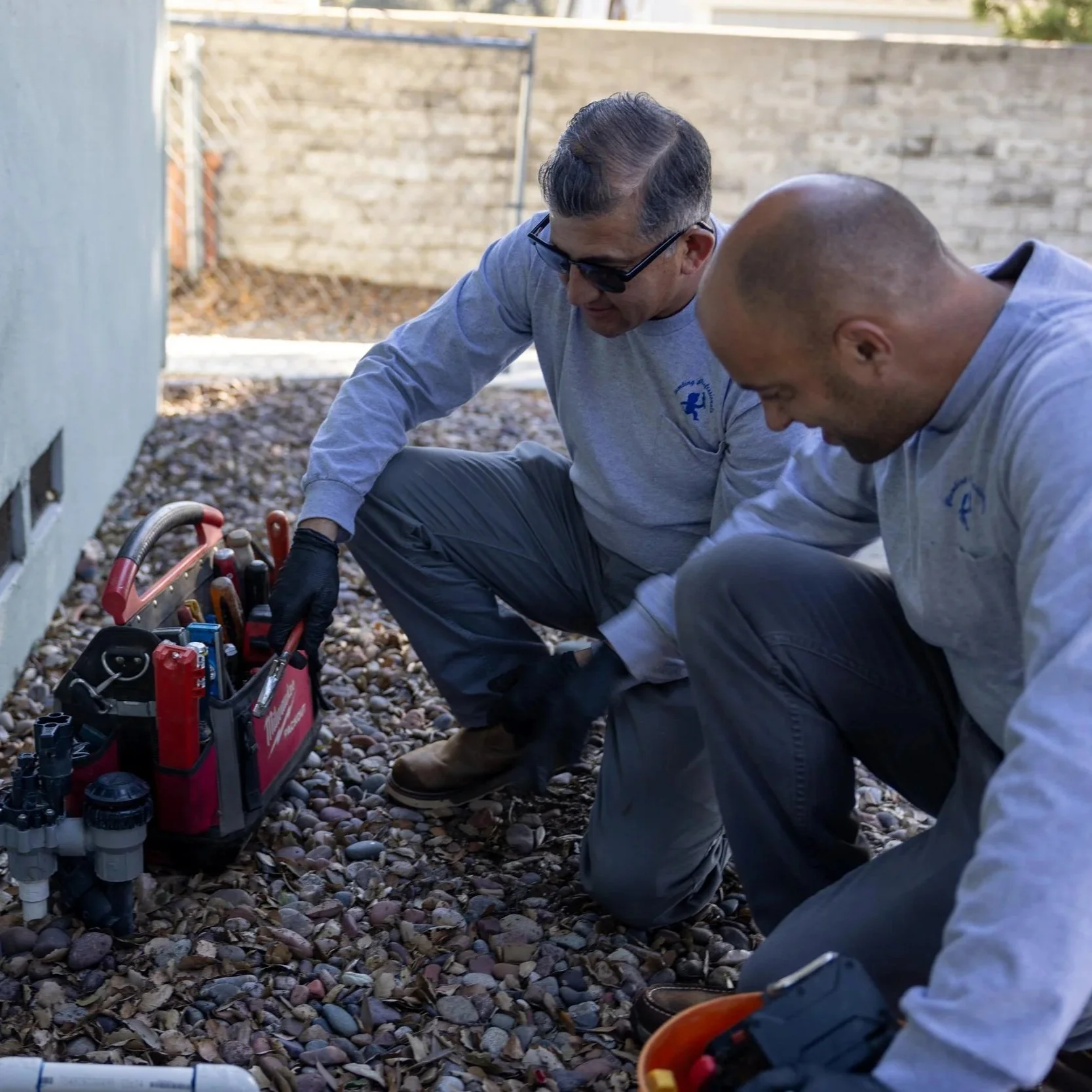
Two plumbers inspecting outdoor plumbing lines and tools while diagnosing burst pipe issue during emergency pipe repair service.
Shut Off The Water Immediately
The first action after a pipe bursts is shutting off the main water supply to the house. Every homeowner should know where that valve is located before an emergency happens. In many homes, the main shutoff is close to the water meter, in a basement, or along an exterior wall.
When a pipe fails, water continues to flow under pressure. That pressure can release dozens of gallons in a short period of time. Turning off the main supply stops additional water from entering the system and limits ongoing damage. Many homeowners first search for the leak itself, trying to stop the spray. The more important step is stopping the water flow at the source.
After shutting off the main valve, open faucets in the home to relieve remaining pressure. That reduces additional dripping from damaged sections. Emergency pipe burst repair professionals often arrive to find water still running because the main was not fully closed. Acting quickly at the valve can prevent thousands of dollars in structural repairs.
Address Electrical Safety Before Cleanup
Water and electricity are a dangerous combination. If the burst pipe is near outlets, appliances, or electrical panels, do not step into standing water without assessing the risk. If you suspect that water has reached wiring or circuits, shut off power to the affected area at the breaker panel if it is safe to do so.
Homeowners sometimes rush into cleanup without thinking about electrical hazards. A ceiling light fixture or an extension cord that is soaked or wet presents a serious risk. Safety must come before salvaging furniture or rugs.
If you are unsure about electrical exposure, wait for qualified professionals. Emergency pipe burst repair is not just about plumbing. It often involves coordination with restoration specialists and, in some cases, electricians. Protecting yourself and your family from shock hazards is just as important as stopping the leak.
Contain And Remove Standing Water Quickly
Once water flow has stopped and safety is confirmed, begin removing standing water. Towels, mops, and wet vacuums can help in the early stages. The faster water is extracted, the less time it has to soak into materials.
Drywall, insulation, and subflooring absorb moisture quickly. Within hours, water can begin to weaken structural components and promote mold growth. Even if the visible water seems minimal, hidden moisture may already be spreading.
Emergency pipe burst repair teams often bring industrial drying equipment. However, initial homeowner action can make a significant difference. Moving furniture away from wet areas and lifting rugs helps prevent further absorption. The goal is to reduce contact time between water and porous materials.
Document The Damage For Insurance
After stabilizing the situation, take photographs and videos of the affected areas. Capture images of the burst pipe, water damage, and any impacted belongings. Documentation supports insurance claims and provides a clear record of conditions before cleanup progresses.
Homeowners sometimes focus solely on drying and forget to record the initial state. Insurance adjusters rely on evidence to assess coverage. Accurate documentation protects your interests and simplifies the claims process.
Emergency pipe burst repair often involves both plumbing and restoration services. Clear records help coordinate communication between contractors and insurers. That step reduces confusion and speeds up resolution.
Do Not Assume The Damage Is Only Where You See It
A common mistake after a pipe bursts is assuming that visible water represents the full extent of the problem. Water travels. It seeps into wall cavities, under baseboards, and across subfloors. By the time a ceiling stain appears, moisture may already have spread far beyond the initial leak.
Homeowners sometimes dry surface areas and believe the crisis is over. Without professional assessment, hidden moisture can remain trapped. Over time, that moisture leads to mold growth, wood rot, and persistent odors.
Emergency pipe burst repair includes inspecting adjacent areas to detect concealed damage. Moisture meters and thermal imaging tools help identify affected zones. Addressing hidden moisture early prevents secondary problems that may surface weeks later.
Understand Why The Pipe Burst
After immediate containment, the next critical step is determining why the pipe failed. Pipes can burst due to freezing temperatures, excessive water pressure, corrosion, or physical damage. Simply replacing the broken section without understanding the cause can lead to repeated incidents.
For example, if high water pressure contributed to the failure, installing a new pipe without adjusting pressure leaves the rest of the system vulnerable. If corrosion is widespread, replacing one segment may not prevent future leaks elsewhere.
Emergency pipe burst repair should include evaluating system conditions. At Plumbing Professionals, we examine pressure levels, pipe materials, and the overall age of the system. Addressing root causes reduces the likelihood of another emergency.
The Cost Of Waiting Even After The Leak Stops
Some homeowners shut off the water and postpone calling for help, assuming that the situation is under control. That delay can be costly. Moisture trapped behind walls continues to cause damage even after active leaking stops.
Mold can develop within 24 to 48 hours in damp conditions. Wood framing weakens over time. Flooring adhesives break down. What appears manageable on day one may become a significant restoration project if left unaddressed.
Emergency pipe-burst repair is time-sensitive. Rapid response limits structural damage and reduces long-term repair costs. Waiting to see if everything dries on its own often leads to more extensive remediation later.
Preparing For The Future After A Burst
After repairs are complete, consider preventive steps. Regular inspection of exposed pipes, monitoring water pressure, and addressing signs of corrosion reduces risk. If the burst was caused by freezing, insulating vulnerable lines is essential.
Homeowners often ask, “How can I prevent another pipe burst?” The answer depends on the cause. Pressure regulation devices, pipe insulation, and proactive plumbing evaluations all play a role. A conversation about system health and maintenance should follow the emergency pipe-burst repair.
Investing in preventive care reduces the chance of experiencing the same stress again. A burst pipe is disruptive, messy, and emotionally draining. Planning protects both property and peace of mind.
